 Almost there! The third trimester is full of expectation, as the moment you will hold the baby in your arms approaches. But the excitement comes with a lot of uncomfortable symptoms…
April 2, 2017 6:23 am
Almost there! The third trimester is full of expectation, as the moment you will hold the baby in your arms approaches. But the excitement comes with a lot of uncomfortable symptoms…
The third trimester lasts from the 7th through the 9th month of pregnancy, that is, from week 28 till the moment you give birth, usually around week 40. This period can be challenging and tiring, as your womb grows and creates a lot of discomfort. Most of the symptoms you will experience are those that appeared during the second trimester, although they will be more intense now: back pain, leg swelling, sleep problems, itchy skin…
But keep a positive attitude! Read this list with the most common symptoms of the last three months of pregnancy and learn what you can do to relieve them. We will focus on the symptoms that appear during the third trimester, or that are somewhat different now. This is what you can expect:
 As your uterus grows, it pushes against the abdominal wall and stretches its muscles (the ‘six pack’ muscles), which will start separating in the middle and cause a bulge, or gap in the middle of the abdomen. This condition, called diastasis recti abdominis, is more evident when the abdominal muscles are tense, such as during coughing or getting up from a lying down position. Diastasis recti can cause lower back pain, making it difficult to carry out certain activities, such as lifting objects.
Not all women develop abdominal muscle separation; you are more likely to get it if you are older than 35 years-old, have a multiple pregnancy or carry a large baby, or have repeated pregnancies.
What can you do about it:
 By the end of pregnancy, you may notice a yellowish fluid leaking from your nipples, and this is normal. This substance, called colostrum, will nourish your baby in the first few days after birth.
While some women leak quite a lot of colostrum, others don’t leak at all. Leaking won’t make any difference to how much milk you will produce once your baby is born.
What can you do about it:
 Tingling, numbness, weakness and pain in the hands during the last trimester are usually caused by a condition called carpal tunnel syndrome (CTS).
CTS is common in pregnancy, and happens due to the fluid retention in the tissues of the wrist, which in turn squeezes a nerve (the median nerve), that runs down to your hand and fingers. Women that keep doing forceful or repetitive hand and finger movements (such as long hours at a computer, or the use of vibrating equipment) may have worse symptoms.
What can you do about it:
CTS usually disappears without treatment after childbirth, when pregnancy-related fluid buildup is relieved. In the meantime, you may try the following:
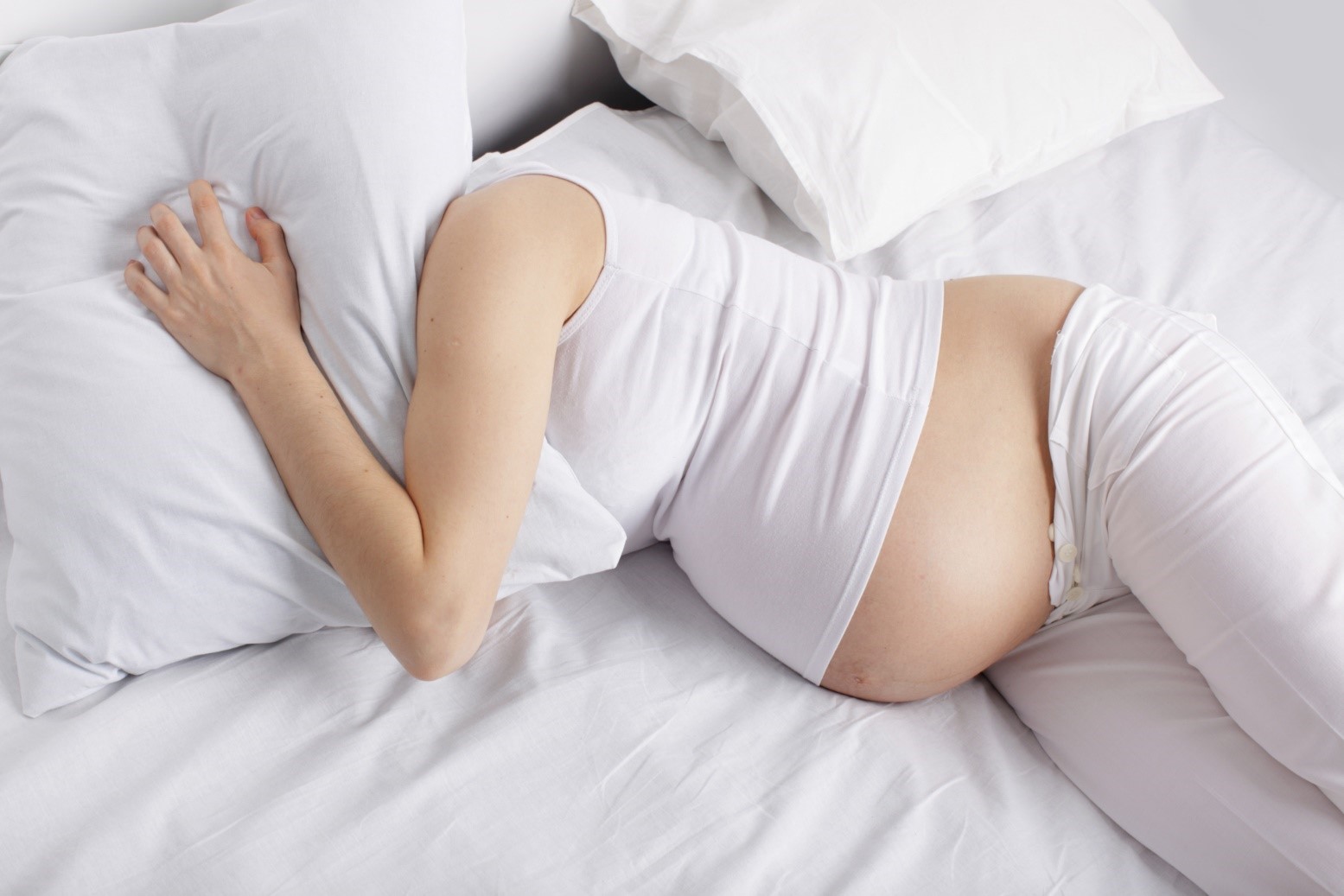 You knew about the sleep problems during pregnancy. But you may get surprised, even disturbed when you start getting frequent and vivid dreams, occasionally nightmares; you may also realize that you remember your dreams more clearly.
The exact reason of these changes in the dream pattern is not clear, but they seem to be related to hormonal and emotional factors, as well as the frequent sleep disruptions that come with pregnancy (read more here).
What can you do about it:
 You may have noticed that, as pregnancy progresses, you get clumsier: things fall from you hands, you bump into doors, you may accidentally fall down! It is not just you, clumsiness is normal in pregnancy and is related to many factors: you are heavier and your growing womb changes the center of gravity, making it more difficult to move; your “pregnancy brain” makes it harder for you to concentrate on your activities; in addition, a hormone called relaxin relaxes all the joints in your body. Therefore, you won’t have the balance or dexterity you used to have.
The same reasons explain why, at the end of pregnancy, you will start waddling, which in turn will make you even clumsier!
What can you do about it:
Clumsiness is normal and there is not much you can do to prevent it. However, it is important that you take measures to protect yourself -and others- from accidents:
 As you get closer to childbirth, your anticipation grows, so do your anxiety, fears and concerns! Besides all the hormonal-related emotional changes, you may start getting worried about the delivery itself, as well as all the changes the baby will bring, your role as a parent, etc (see here).
What can you do about it:
 Forget the energy you had during the second trimester: fatigue is back! Carrying extra weight, waking up several times during the night to go to the bathroom, and dealing with the anxiety of preparing for a baby can all decrease your energy level.
What can you do about it:
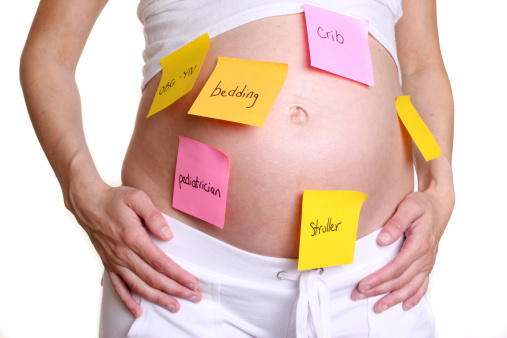 It’s not a myth: intense forgetfulness, known as “pregnancy brain” is a normal symptom of pregnancy, which nevertheless can be very annoying!
It is mostly related to pregnancy hormones, but sleep disturbances and fatigue can make it worse.
What can you do about it:
Don’t worry! Your brain will work normally again after delivery. Well, sort of, as you will have to deal with the sleepless nights while taking care of your baby 😉
In the meantime, these tips may help:
 As your baby grows, the pressure on your bladder increases, causing a constant feeling you need to go to pee. This may be worse during the night, because when you lie down, the fluids you retained in your legs and feet during the day make its way back into your bloodstream and eventually into your bladder.
Many women also experience stress urinary incontinence, that is, they lose some urine when they cough, laugh, sneeze, lift heavy objects, or exercise.
What can you do about it:
To reduce frequent urination:
To avoid incontinence:
You should inform your doctor or midwife if you feel pain or burning with urination, if your see blood when you wipe or if you feel the urge to pee even when you produce just a few drops at a time. These could be signs of a urinary tract infection (UTI).
 Another symptom you may have experienced during the first three months of pregnancy, got better during the second trimester but now came back! While the heartburn you experienced during the first trimester was hormone-related, now your enlarged uterus is to blame, as it crowds the abdomen, pushing the stomach acids upward.
What can you do about it:

Once you’re in your third trimester, you may experience pain and pressure in your pelvic region, as the weight of your growing fetus presses down on certain nerves that run into the legs; for the same reason you may also feel tingling, numbness and pain along the outer thigh; which can be very annoying for some women.
Relaxed pelvic joints are a common cause of pelvic pain: toward the end of your pregnancy the hormone relaxin helps the ligaments become loose in preparation for childbirth. This hormone can also loosen your pelvic joint, and even cause it to separate a bit. It’s common to feel pain near your pubic bone, and you may also feel like your legs are unstable. This is called Symphysis pubic dysfunction (SPD).
Your fetus’s head can also to rub your tailbone, causing tailbone pain and pressure. The condition is called coccydynia and occasionally the pain can be very intense.
Braxton Hicks contractions can also cause pressure and tightening in the pelvis (see below). Constipation also can cause pelvic pain or discomfort (see here).
What can you do about it:
Be patient! Once your baby is born, all the pressure-related symptoms will be gone; in addition, relaxin production will cease and the joints will be firm again, easing your pain. In the meantime:
 During the second trimester some women experience some swelling of the ankles and feet. Now, swelling – or edema will be also evident in the hands, face and upper legs.
Swelling is normal and is caused by the excess blood and fluids your body produces to meet the baby’s needs. This extra fluid will also soften the body and help it expand as the baby grows, and prepare the joints and tissues to open more easily during delivery.
Swelling is usually worse with warm weather, if you stand up for long periods of time, if you consume too much caffeine or salty foods, or if your diet is low in potassium.
What can you do about it:
 As your pregnancy progresses you may start feeling breathless after minimal amounts of physical exertion, or even when talking!
Mild breathlessness is totally normal; during early pregnancy is due to pregnancy hormones, which make you take more and deeper breaths, so that you get additional oxygen for the baby. But in the third trimester, shortness of breath is mostly related to your expanding uterus putting pressure on the lungs and diaphragm, making it harder to take a deep breath.
What can you do about it:
 Increased vaginal secretions are completely normal and start during the first trimester. These discharge helps prevent infections travelling up from the vagina to the womb.Towards the end of pregnancy, the amount of discharge increases and can be confused with urine; close to delivery it may even contain streaks of thick mucus and some blood (this is called “bloody show”; we will discuss more about it in another post). Vaginal secretions should be white or clear, and should not smell unpleasant.
What can you do about it:
 If you feel something “like worms” on your genital area, together with some pressure, swelling of discomfort in the vulva, don’t panic! These are dilated vulvar veins and occur due to the increased blood flow to the area, and the pressure the growing uterus puts on the veins of your lower body. Vulvar varicosities are seen quite often during pregnancy, either alone or with varicose veins of the legs, or hemorrhoids. Long periods of standing, exercise and sex can aggravate them. Occasionally though, they are completely asymptomatic, and the only way you’ll know you have them is because your doctor tells you.
What can you do about it:
Most of the times, vulvar varicosities don’t affect your mode of delivery, and they go away on their own after birth. If they are bothersome, you may try the following:
 During the second trimester and beginning of the third, your baby has plenty of room in the womb, so most likely you will feel pushing, swirling, twisting, and kicking. But as he/she grows bigger, there is less space for movement; thus probably you won’t get the punches and kicks you were used to. Instead, you’ll feel more wiggles, stretches and turns. Although by the end of pregnancy mobility may be reduced when he gets engaged in the pelvis, the baby should keep moving until the moment he is born.
But you should contact your midwife or doctor right away if you notice any of the following:
 You should aim for a weight gain of about 1-2 kg per month during your third trimester, but it is not unusual to lose 1 or 2 kilos by the end of pregnancy, as your stomach gets compressed by the baby and you get a feeling of fullness even with small meals. In total, you should have put on about 12 kg (8-16 kg). However, your doctor may recommend that you gain more or less weight if you started out your pregnancy underweight or overweight.
 Pressure or tightening in the pelvis that comes and goes could be contractions, but if they’re sporadic and not painful, they’re most likely Braxton Hicks contractions. They usually begin as early as the second trimester; however, they are most commonly experienced in the third trimester.
If you are not sure whether the contractions you feel are true or false labor, try the following:
If none of these steps works at any stage of pregnancy; or if you are less that 37 weeks pregnant and you have contractions every 15 minutes or closer that persist over two hours, contact your health care provider.
When getting closer to the due date, most certainly you will start wondering: What are the signs labor is coming? How will it feel? and mainly: Will I understand when it’s time? A post answering these questions will follow soon… Stay tuned!
Any of these symptoms could be a sign that something is wrong with your pregnancy. Call your doctor right away if you experience any of these symptoms:
This list of not exhaustive; do not hesitate to contact your healthcare provider for any other symptom you are unsure whether it’s normal or not.
References
Photo credits
Intro: Flickr.com; 1) lifeopedia.com; 2) sheknows.com; 3) momjunction.com; 4) answerforsleep.com; 5) health.com; 6) Flickr.com; 7) healthymamabrand.com; 8) healthywomen.org; 9) intimina.com; 10) baby-pedia.com; 11) onlymyhealth.com; 12) medicmagic.net; 13) dnaindia.com; 14) pinterest.com; 15) amazon.com; Baby movements: babycenter.ca; Weight gain: parenthub.com.au; Braxton Hicks: birthcentered.com; When to worry: herb.co
Posted by woman2womenblog
Tags: abdominal muscle separation, acupuncture, ‘six pack’ muscles, baby, baby movements, back pain, backache, beauty treatments, belly, bleeding, bloody show, Braxton Hicks contractions, breast enlargement, breast leakage, breastfeeding, breathing problems, breathlessness, burning during urination, carpal tunnel syndrome, choline-rich foods, clumsiness, coccydynia, colostrum, constipation, contractions, cramping, CTS, delivery complications, DHA-rich foods, diastasis recti abdominis, dizziness, edema, emotional changes, emotions, fainting, false labor, fatigue, fever, forgetfulness, foul-smelling vaginal discharge., frequent awakening, frequent urination, gestational diabetes, green vaginal discharge, growing uterus, headache, health, healthy lifestyle, heartburn, hemorrhoids, high blood pressure, hormones, increased fetus weight, insomnia, intense swelling, itchy skin, leakage of milk, leg swelling, median nerve, mood swings, nausea and vomits, nightmares, numbness, nutrition, pain in the hands, pelvic pain, physical activity, practice contractions, Pregnancy, pregnancy brain, pregnancy massage, pregnancy symptoms, rapid weight gain, relaxed pelvic joints, relaxin, severe abdominal pain, severe dizziness, severe nausea, shortness of breath, signs of labor, skin changes, sleep apnea, sleep position, sleep problems, SPD, stress urinary incontinence, support bra, swelling, swelling of feet, swelling of the ankles, swollen veins, symphysis pubic dysfunction, symptoms, tailbone pain, third trimester, tingling, urinary incontinence, urinary tract infection, Uterus, UTI, vaginal bleeding, vaginal discharge, varicose veins, vivid dreams, vomiting, vulvar varicose veins, waddling, watery vaginal discharge, weakness, weight gain, womb, wrist splint, yellow vaginal discharge
Mobile Site | Full Site
Get a free blog at WordPress.com Theme: WordPress Mobile Edition by Alex King.