PHTHALATES LINKED TO PREGNANCY LOSS -AND OTHER HEALTH PROBLEMS

Embed from Getty Images

A recent study came -again- to incriminate certain environmental toxins known as phthalates as being responsible for pregnancy losses. Women undergoing assisted reproduction techniques (in-vitro fertilization or intra-uterine insemination) had urine exams to assess the presence of certain phthalates; it became evident that women with high levels of phthalates had up to three times increased risk of pregnancy loss. The study was recently presented at the Annual Meeting of American Society for Reproductive Medicine (ASRM).

For several years now we have been hearing about the toxic effects of phthalates, but what are they exactly? Where do we find them? Are they really harmful? Check out this article to learn more about these enigmatic toxins…

What are Phthalates?

Phthalates are chemicals used to soften plastics and make them more flexible (they are also known as plasticizers). These substances do not bound to plastics, therefore they are continuously released into the air, foods or liquids. Certain phthalates are used as dissolving agents for other materials.

Where do we find them?

Phthalates are used in an astounding array of products. They are most commonly found in:

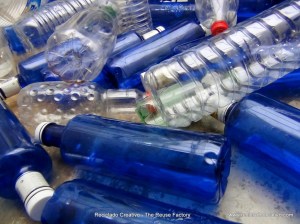
  • Plastic bottles.Phthalates plastic bottles
  • Plastic containers and plastic wraps.
  • Cosmetics: in creams and lotions (to help them penetrate and soften the skin), in perfumes (to help them last longer), in hair sprays (to reduce stiffness), in nail polish (to prevent chipping), in deodorants, soaps, shampoos and almost every cosmetic with fragrance, including baby products.
  • Household products: air fresheners, paints, plastic flooring.
  • Plastic toys and other baby products such as teethers.
  • Certain medical devices, e.g., blood bags, intubation tubes, intravenous catheters.
  • Objects made of vinyl or PVC.
  • Phthalates are present even in seemingly unexpected sources. One example is milk: even in glass bottles, high levels of phthalates have been found, presumedly due to the plastic tubing used in milking machines.

We get exposed to phthalates by:

  • Ingestion: eating food contaminated from food packaging; drinking beverages from plastic bottles that leach the chemical; sucking plastic objects (e.g., baby toys, teethers).
  • Absortion: using cosmetics products. According to the CDC, women of childbearing age have the highest levels of phthalates, possibly due to the use of cosmetics.
  • Inhalation: breathing dust or fumes from products containing vinyl (vinyl floors, the interior of cars, shower curtains, etc).

Which are the most commonly used phthalates?

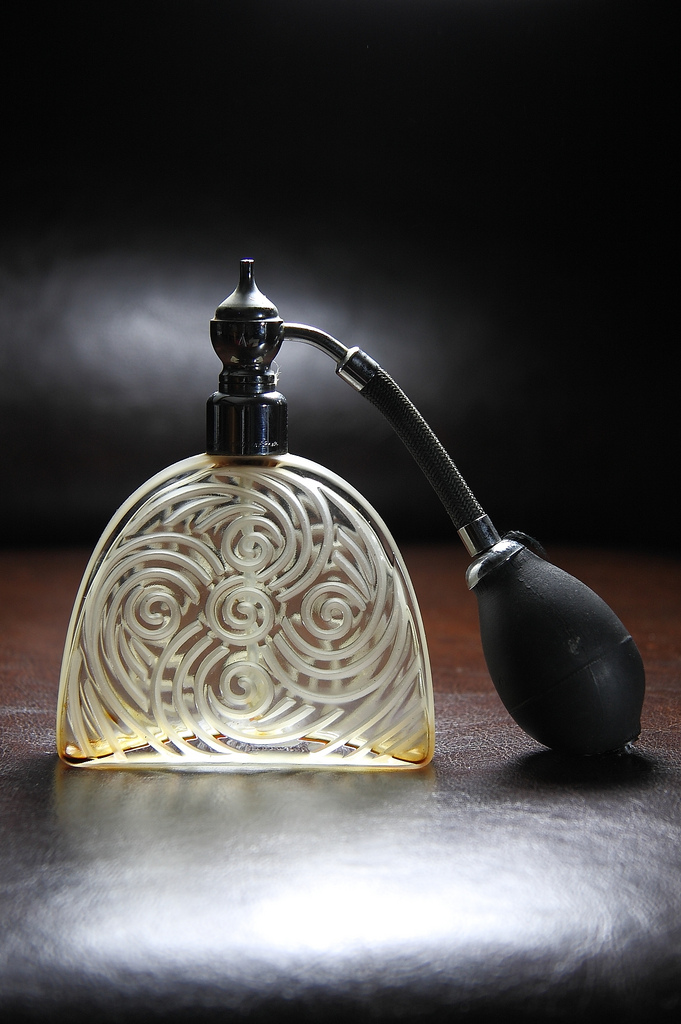
Phthalates perfumeThese chemicals have very difficult names, but there are a few you may want to keep in mind (see the studies below):

-In cosmetics: the primary phthalates used in cosmetic products have been dibutylphthalate (DBP), used in nail polishes; dimethylphthalate (DMP), used in hair sprays; and diethylphthalate (DEP), used as a solvent and fixative in fragrances. According to latest survey of cosmetics conducted by the Food and Drug Administration (FDA) in 2010, DBP and DMP are being used rarely, while DEP is the most commonly used phthalate. The use of DBP and DEHP is banned in the European Union  but they are still found in cosmetic products.

-In food packaging: the most commonly used is Di-(2-ethylhexyl) phthalate (DEHP). Bisphenol-A (BPA) is not a phthalate, but is also being used as plasticizer in food packaging and plastic bottles.

-In paints, plastic and PVC objects, solvents and adhesives: DEHP, Diisobutyl phthalate (DIBP) and DBP (also called DnBP).

-In children toys and child care products: In the USA, phthalates used in these products have been divided in three categories:Phthalates toy ducks

  1. permanent ban (permanently prohibits the sale of any “children’s toy or child care article” individually containing concentrations of more than 0.1% of DBP, BBP or DEHP);
  2. interim ban (prohibits on an interim basis the sale of “any children’s toy that can be placed in a child’s mouth” or “child care article” containing concentrations of more than 0.1% of DNOP, DINP, or DIDP); and
  3. currently unrestricted under Section 108 of the Consumer Product Safety Improvement Act of 2008 (DMP, DEP, DIBP, DCHP, DIHEPP, DIOP, DPHP).

Similar recommendations apply in Europe, where the six above-mentioned products are banned.

What is the evidence linking phthalates to pregnancy losses?

In addition to the recent American study (where they measured metabolites of DEHP), two previous studies had found a relationship between phthalates and miscarriages:

In 2012, a Danish study  found an increased risk of early pregnancy loss in women with high urine levels of DEHP‘s breakdown products. More recently, a Chinese study, comparing urine samples of women who had miscarriages and healthy women found that pregnancy loss was associated with higher levels or three phthalates: DEP, DBP, and di-isobutyl phthalate (DiBP).

Another American study also found and increased risk of miscarriages in women with high levels of BPA.

Eliminating phthalates and BPA from our lives is virtually impossible, but you can take some measures to minimize exposure, especially if you are trying to conceive, are pregnant or have young children”

Are there any other health risks?

Phthalates are widely known as endocrine disruptors: they mimic hormones, interfering with their function. Some possible consequences of this are:

Effect on male fertility: phthalate exposure in men was associated with reduced fecundity.

Birth defects in baby boys: several studies have found abnormalities in baby boys’ genitals when pregnant women were exposed to high levels of certain phthalates; another study found increased risk of hypospadias (the opening of the urethra is on the underside of the penis) in occupational exposure of pregnant women.

Neurological problems in newborns, infants and children: such as attention deficit hyperactivity disorder (ADHD), reduced IQ, behaviour problems.

Obesity: both in children and adults.

Asthma: in children when pregnant women were exposed to high level of phthalates.

Interference with puberty in girls: the evidence is inconsistent on this subject; while some studies found that phthalates may be related with precocious puberty, others reported delayed puberty.

Breast cancer: a small study showed increased breast cancer risk, but the evidence is not conclusive; there is a large study being conducted in the USA, which will provide more clear answers on this matter.

What can I do to reduce exposure to phthalates?

Phthalates glass food containersEliminating phthalates and BPA from our lives is virtually impossible -they seem to be everywhere- but you can take some measures to minimize exposure, especially if you are trying to conceive, are pregnant or have young children:

  1. Read labels on personal care products. Unfortunately, manufacturers are not forced to list phthalates, and  they can be added as a part of the “fragrance.” Many companies have voluntarily removed phthalates from their products, so you may search for products labelled as “phthalate-free”.
  2. Limit the use of baby care products in babies and young children.
  3. Don’t microwave food in plastic, or use only “microwave safe” and phthalate-free containers to microwave food or drinks. Phthalates can leach from containers (or plastic wrap) into foods on contact and when heated, particularly oily foods or with a high fat content. Don’t put plastic containers in the dishwasher (heat will increase phthalates leaching).
  4. Replace plastic bottles, cups, dishes and food containers with those made of glass, porcelain or stainless steel, especially for hot food and beverages.
  5. Check labels on plastic bottles and containers: choose only those with recycle codes 1, 2, 4, or 5. Plastics made of polyethylene terephthalate (PET) or high-density polyethylene (HDPE) are safer than those made of PVC (“PET” or “HDPE” may be printed on the label or the bottom of the bottle).
  6. Use only toys and toothbrushes labeled “phthalate- free”. There are strict regulations banning the most dangerous phthalates in toys and baby products, both in the USA and in Europe.
  7. Reduce your use of canned foods, as they are often lined with material that contains BPA. Prefer fresh products or those in glass containers. Avoid canned milk (including canned formula for babies).
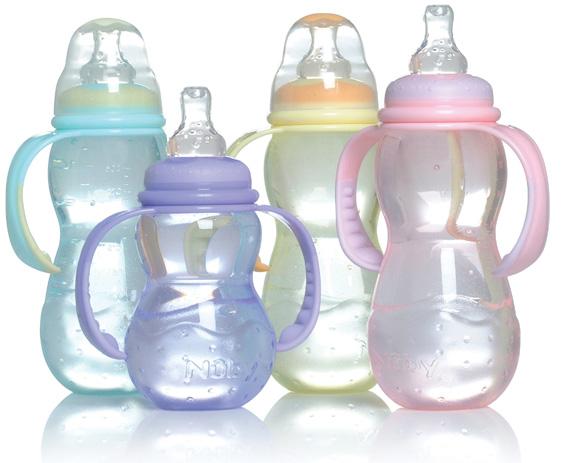
  8. Phthalates baby bottlesChoose only bottles and cups that are BPA-free. In fact, BPA was banned in all baby products in 2011 in Europe, and since 2012 in the USA.
  9. When using paints or solvents, keeps the area well ventilated. Prefer natural paints, phthalate-free (DBP is the phthalate usually used in these products).
  10. Choose non-vinyl products, such as shower curtains, raincoats or furniture, as the chemical off-gassing from these products introduces phthalates to your environment.
  11. Keep your house clean, as phthalates can remain in dust.
  12. Avoid air fresheners; prefer essential oils instead.

Is anything being done?

Phthalates safe cosmeticsAs people are becoming more aware of the harmful effects of phthalates, increasing information is being available to consumers; websites such as the Campaign for Safe Cosmetics have actively advocated the elimination of dangerous chemicals from cosmetics and personal care products. As a result, certain companies and retailers have been taking measures to reduce toxic substances in their products.

Initiatives are also being taken at governmental level. European authorities have restricted the use of phthalates in some baby products, cosmetics, and plastics designed to come into contact with food; more phthalates will be soon banned from medical equipment, electrical and electronic devices. Recently, a very extensive Report to the U.S. Consumer Product Safety Commission by the Chronic Hazard Advisory Panel on Phthalates and Phthalates alternatives (CHAP) analyzed the available data on each phthalate and phthalates alternative and provided recommendations, which will hopefully lead to banning certain phthalates that proved to be toxic.


Photo credits

Getty Images; Reciclado creativo, Flickr.com; Etienne, Flickr.com; Pixabay.com; Target.com; Alicia Voorhies, Flickr.comjillsamter.com

THE HPV VACCINE: WHY IS IT CONTROVERSIAL?

The HPV vaccine has been around for almost 10 years and more than 175 millions doses have been distributed in 63 countries, with several studies confirming its safety and efficacy. In spite of that, the vaccine still remains a subject of controversy. Although recommended by most scientific societies worldwide, some recent reports questioning its safety fuelled even more the debate, dividing both general public and medical community.

Embed from Getty Images


In this article we will analyse the existing evidence regarding the HPV vaccine, with particular focus on its efficacy and safety. In order to organise the available information, the article will be divided into the following sections:

  1. Getting to know HPV
  2. Why a vaccine? The burden of HPV-related diseases
  3. The three available HPV vaccines
  4. Vaccination schedule and timing 
  5. Efficacy of the HPV vaccine
  6. Safety of the HPV vaccine
  7. Recent safety concerns: the chronicle of events
  8. Other debatable issues
  9. Unanswered questions…
  10. Conclusion

1. Getting to know HPV

HPV vaccine cure cancer awarenessHPV (human papillomavirus) is a virus and is transmitted from person to person through skin-to-skin contact.

  • HPV infection is extremely common, and most of the times it will be cleared by the immune system.
  • Of the over 100 types of HPV, about 12 subtypes of the HPV (mostly subtypes 6 and 11) may cause genital warts (also known as condylomas). These so-called “low-risk types” can also cause a rare condition called recurrent respiratory papillomatosis, in which warts grow in the throat.
  • Approximately 15 types of HPV (most commonly types 16 and 18) are related to cancer. While cervical cancer is the most common HPV-related cancer, this virus can also cause other cancers: vulvar, vaginal, anal and oropharyngeal (mouth and throat),  as well as penile cancer in men.

You can read more detailed information on HPV here.


2. Why a vaccine? The burden of HPV-related diseases
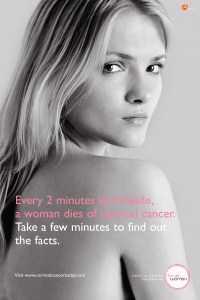
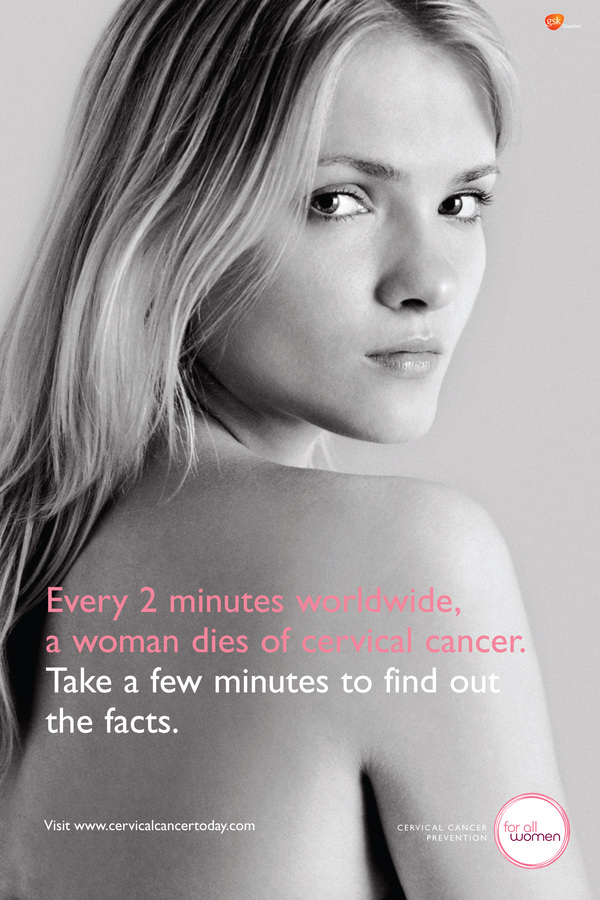
HPV vaccine every 2 minutes a woman diesThese figures will give you and idea of the magnitude of the problems caused by HPV:

-Worldwide, over 500,000 new cervical cancer cases are diagnosed annually. Cervical cancer ranks as the 4th cause of female cancer in the world and is the 2nd most common female cancer in women aged 15 to 44 years (1).

In the United States, an estimated 26,000 new cancers are attributable to HPV each year, about 17,000 in women and 9,000 in men (2) .

In Europe, about 58,000 new cases of HPV-related cancers are estimated to occur every year (3).

-Regarding  precancerous lesions, the estimated annual burden of high-grade precancerous lesions ranges between 280,000 and 550,000 new cases per year in Europe (4).

-In addition to cancers and precancerous lesions, the problem of genital warts should also be taken into consideration. Genital warts are very common: 1 out of 10 persons will have condylomas at some point in their lives (the frequency varies according to different countries between 0,3 and 12 %) (5). About 800,000 new annual genital warts cases are estimated to occur in women and men in Europe (4). Although not life-threatening, the costs derived from their treatment and their psychological burden should not be neglected.


3. The three available HPV vaccines
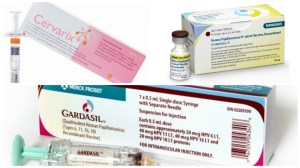
HPV vaccine collageFrom 2006, 2 vaccines have been available: One bivalent (Cervarix®), directed against HPV types 16 and 18, responsible for about 70% of cervical cancers  and other HPV-associated cancers; the other quadrivalent (Gardasil® of Silgard® in different countries) containing 4 HPV types:16 and 18, together with HPV 6 and 11 which are responsible for more than 90% of genital warts.

In December 2014, the American Food and Drug Administration (FDA) approved a nine-valent vaccine, Gardasil 9® (6), which, besides the 4 strains contained in Gardasil (i.e., 6,11,16,18), includes types 31, 33, 45, 52, and 58, responsible for an additional 20% of HPV-related cancers (4). Gardasil 9 has also been recently approved for commercialisation in Europe (7).


4. Vaccination schedule and timing 
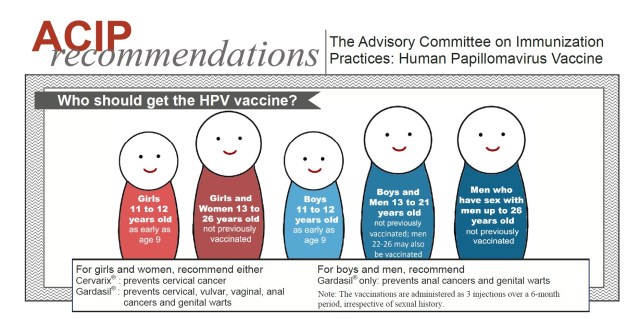
HPV vaccine who should get it ACIPinfographic

  • Vaccines are given as a 3-dose series, Gardasil at 0, 2 and 6 months, Cervarix at 0, 1 and 6 months (8).
  • In the States, The Advisory Committee on Immunization Practices (ACIP) and  the American College of Obstetrician and Gynecologists (ACOG) recommend that girls be routinely vaccinated at age 11 or 12 years.
  • Since 2010 boys have been included in the vaccination schedule in the USA, with the same schedule as girls.
  • If not vaccinated when they were younger, girls/young women and boys/young men should be vaccinated through age 26 (9).
  • Vaccine may be given starting at age 9 years (9, 10).
  • A reduced, 2-dose schedule is recommended by the World Health Organization (WHO) for those aged 9-13 years; this schedule is not recommended by the ACIP but it has been adopted by many countries.HPV vaccine Protect your children
  • Earlier vaccination (before age 14) results in higher immune response. Another argument in favor of early vaccination is the fact that vaccines are more effective before the onset of sexual activity (8).
  • Vaccination is recommended regardless of sexual activity or known HPV infection. Although vaccines seem to be less effective in sexually active people, some benefit is expected to be attained since exposure to all types of HPV included in the vaccines is very unlikely. Testing for HPV is NOT recommended before vaccination.
  • The vaccines are prophylactic, that is, they do not prevent progression of existing infection to disease or treat existing disease. (2)
  • The HPV vaccine is covered by most private health insurance and government insurance programs worldwide. Vaccinations schedules may vary in different countries.
  • There seems to be additional protection by the vaccine in women through age 45, as showed by certain studies (11). However, there is no recommendation for vaccination in individuals aged 26 to 45.
  • The same schedule applies for Gardasil 9 (0, 2 and 6 months). Revaccination with the nine-valent vaccine is not recommended in persons who previously completed the three-dose series with the bivalent or or quadrivalent HPV vaccine (8).

5. Efficacy of the HPV vaccine

HPV Vaccine Charlene-Choi1The ultimate goal of the HPV vaccine is to reduce the incidence of HPV-related cancers. For obvious ethical reasons, the endpoint set to evaluate the HPV vaccine efficacy in different studies was precancerous lesions, namely CIN 2 and 3 (high risk lesions of the cervix, with potential to evolve to cancer). Other efficacy endpoints evaluated were incidence of HPV infection and incidence of condylomas.

Studies conducted before licensure showed that both vaccines achieved a high level of protection: 98-100% for the HPV types included in the vaccine in a naive population (that is, women who did not have HPV 16 or 18 at the time of  vaccination),  although the protection against precancerous lesions was 30-40% in the total vaccinated cohort (which included women who did not finish their immunization plan, or that were already infected with the virus before vaccination) (12, 13, 14, 15). There was also cross-protection for other types of HPV (i.e., HPV 45 and 31), which was more intense with Cervarix (16).

HPV vaccine AustraliaThe impact of vaccination on the general population has also been analysed in some studies. Australia was the first country to introduce an organised HPV vaccination program, achieving one of the world’s highest vaccination compliance rates.  Since 2007, when the National HPV vaccination program started with the quadrivalent vaccine, HPV infections from the types included in the vaccine decreased from 29% to 7% (17); a 93% reduction in the diagnosis of genital warts was also observed (18). Moreover, other recent studies showed an almost 50% reduction of  high-grade cervical precancerous lesions in women who had received all required doses of the vaccine (19).

Denmark also counts with an organised vaccination program. Six years after licensure of the quadrivalent HPV vaccine, a reduction of cervical precancerous lesions was observed, which was 80% in younger patients (20).

Recently, a study was conducted to evaluate the efficacy of the nine-valent vaccine. Gardasil 9 prevented 97% of high-grade precancerous lesions of the cervix, vulva, and vagina caused by the five new high-risk HPV types (HPV31/33/45/52/58) (21). The nine-valent vaccine also generated immune responses to HPV6/11/16/18 that were as good as or better than those generated by the quadrivalent vaccine. (4, 22)


6. Safety of the HPV vaccine

Many studies have evaluated HPV vaccine safety, both before their commercialisation and post-release, which demonstrated no differences in side effects as compared to control groups, irrespective of age and ethnicity (23).

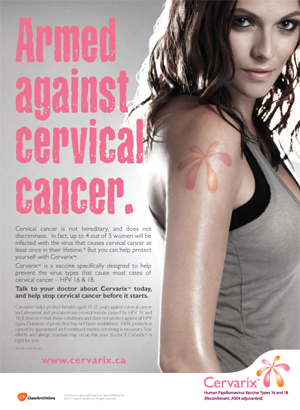
HPV vaccine armed against cancerAccording to the CDC, the most commonly reported side effects of the vaccines are:

  • Pain, redness, or swelling in the arm where the shot was given
  • Fever
  • Headache or feeling tired
  • Nausea
  • Muscle or joint pain

Fainting (also known as syncope) and related symptoms (such as jerking movements) is not uncommon (24), especially in teenagers. For that reason, it is recommended that people receiving the HPV vaccine sit or lie down during vaccination, and remain seated for 15 minutes after the shot. (23)

Considering the target age of vaccination (which includes women in reproductive age), pregnancy outcomes received special attention. No increase in miscarriage rates has been reported for either of the vaccines (25). In addition, pregnant women that were recorded and observed in registrative trials did not have increased rate of congenital abnormalities (26, 27, 24).

Studies have also demonstrated efficacy and safety of the vaccines in men, both in heterosexual and men who have sex with men (28).

Serious side effects are very rare (less than 0.5%) (29), the most common being persistent headache, hypertension, gastroenteritis, bronchospasm and anaphylaxis. Their reported incidence is similar to that of other compulsory vaccines types (30).

HPV vaccine third pokeCertain side effects have been a matter of concern since the introduction of the vaccine, namely autoimmune diseases (AD) (i.e., hypothyroidism, rheumatoid arthritis, Behçet’s syndrome, Raynaud’s disease, type 1 diabetes, and vitiligo), neurological disorders (such as epilepsy, paralysis, Guillain–Barré syndrome, central demyelination, and multiple sclerosis) and venous thromboembolism (a blood clot that plugs a vein). It should be mentioned that ADs are not rare in adolescents and young adults, particularly in women. Therefore, it is a real challenge to distinguish causal from temporal association. A recent study gathered the results of 9 large studies (of which one was an analysis of 42 trials together, or metanalysis) in order to investigate severe adverse reactions after the HPV vaccine. None of the included studies found evidence of increased risk of autoimmune disease, neurological disorder, or venous thromboembolism (31).

The Global Advisory Committee on Vaccine Safety (GACVS), established by the World Health Organization (WHO) provides independent, scientifically rigorous advice on vaccine-safety issues. In December 2013, the committee reviewed different topics and considered all available evidence on the safety of HPV vaccines, and concluded that both commercially available vaccines are safe (32). Likewise, the International Federation of Gynecology and Obstetrics (FIGO) Gynecologic Oncologic Committee and Subcommittee for Cervical Cancer Prevention support the continued administration of the HPV vaccines in appropriate populations (33).

7. Recent safety concerns: the chronicle of events 

HPV vaccine Japanese_SchoolgirlsAlthough some isolated cases of side effects had been described in UK and Australia (34), Japan was the first country reporting on several girls suffering from severe pain and disability; these cases were heavily publicised in newspapers, TV news and social media, but they also alarmed the medical community. Japanese physicians published later on a series of 44 girls who were diagnosed with complex regional pain syndrome (CRPS) (35). Due to these concerns, in June 2013 the Japanese Ministry of Health, Labour, and Welfare (MHLW) decided to suspend its active recommendation of HPV vaccination. This decision created intense debate among scientists and general public, which continues until nowadays (34).

In March 2015, Denmark‘s TV channel TV2 aired a documentary entitled The Vaccinated Girls – Sick and Betrayed. The journalists gathered about 60 girls from all over Denmark who became sick shortly after receiving the HPV vaccine. Among the doctors interviewed is Louise Brinth, who examined approximately 80 girls with similar symptoms potentially caused by the HPV vaccine. Dr. Brinth noted that the girls experience symptoms such as dizziness, passing out, and severe headaches. She said, “They have abdominal pain and nausea. They have weird muscle movements they cannot control. And they’re very tired… We see a pattern that screams to heaven, and that should be examined by some solid research.”

HPV vaccine Danish documentaryIn April 2015, Dr. Brinth reported in a scientific journal on 53 patients complaining of orthostatic intolerance, severe headache, excessive fatigue, cognitive dysfunction, gastrointestinal discomfort and widespread pain. Most of them were diagnosed with a rare syndrome known as postural orthostatic tachycardia syndrome (POTS), and all of them were in close temporal association with the HPV vaccine (36a, 36b).

Denmark’s documentary has had a huge impact worldwide, both in the general public and the medical community. A closed Facebook page set up for suspected victims of adverse reactions to Gardasil in Denmark tripled its -careful verified- members; similar Facebook groups were created in other countries.

At the request of Denmark, The European Medicines Agency (EMA) is currently conducting a safety review of HPV vaccines. However, the agency emphasizes that this review “does not question that the benefits of HPV vaccines outweigh their risks.”The agency also notes that while the review is being carried out, no change in the use of these products is recommended. See the EMA’s review conclusions here.

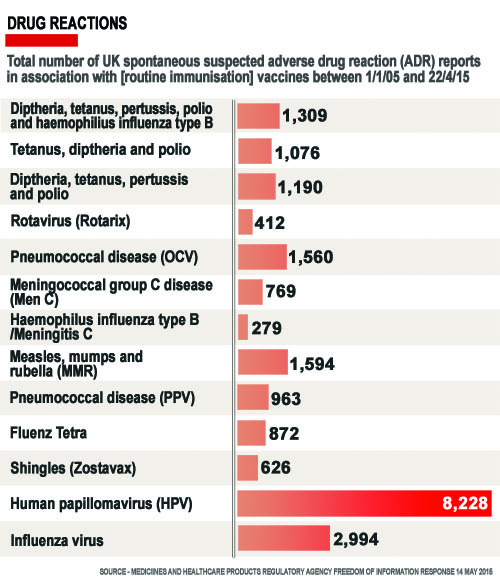
HPV vaccine reactions independent UKIn May 2015, UK’s newspaper The Independent published an article entitled: Thousands of teenage girls report feeling seriously ill after routine school cancer vaccination. The article focuses on the story of Emily Ryalls, 17, who started feeling intense pains and difficulty breathing soon after receiving the HPV vaccine.

Mrs Ryalls reported Emily’s symptoms to the Medicines and Healthcare Products Regulatory Agency (MHRA), and she was not alone: adverse reactions after HPV vaccination numbered 8,228, of which 2,587 were classified as “serious”; that’s substantially more that those reported with other compulsory vaccines (see graph). The MHRA, though, said it had no concerns on the numbers of adverse reactions related to the HPV vaccine and that the “expected benefits in preventing illness and death from HPV infection outweigh the known risks”.

Emily’s mother, together with other 80 families in similar situation across the UK have formed the Association for HPV Vaccine Injured Daughters (AHVID).

As stated by the newspaper “This article created significant debate among medical professionals, journalists and members of the public…”.

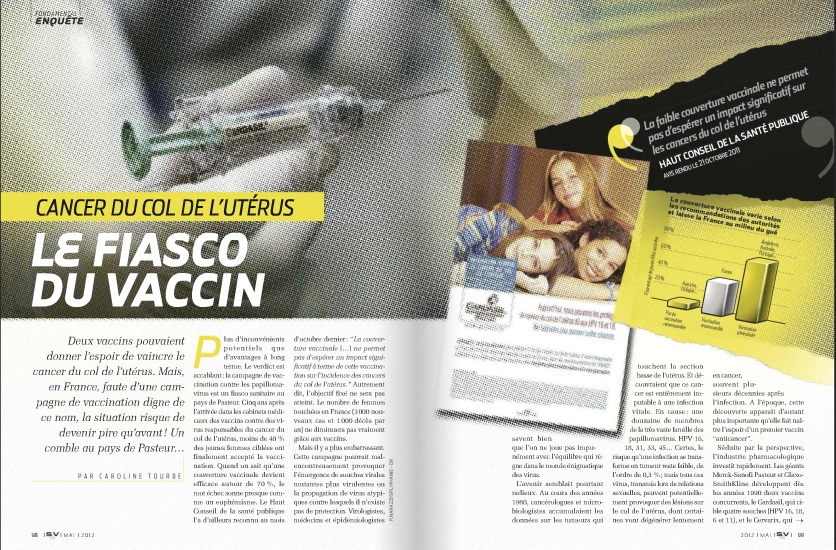
HPV vaccine France fiasco SV-1136-vaccin-HPVIn France, the National Security Agency of Medicines and Health Products (ANSM) just published (September 2015) the results of the follow-up of more than 2 million girls aged 13-16 years, vaccinated between 2008 and 2013 to evaluate the occurrence of side effects, mainly autoimmune diseases. When analysed all the diseases together, their results showed no overall increased risk of occurrence of serious events. However, when each disease was analysed individually, a four-fold increase in the occurrence of Guillain Barre syndrome was observed. The study also found an increased risk of Inflammatory Bowel disease, but the association was weak.

The authors conclude: “…the results of the study… prove reassuring regarding the risk of autoimmune disease associated with the HPV vaccines. The expected benefits of this vaccination in terms of public health are far greater than the eventual risks the girls may be exposed to” (37). In spite of these “reassuring” results, the vaccination rate in France continue to be low (less than 30%).

HPV vaccine POTSIn September 2015, another report provided details on 45 individuals from 13 countries who developed a chronic ailment soon after receiving the HPV vaccine. “A disabling syndrome of chronic neuropathic pain, vexing fatigue, and profound autonomic dysfunction may appear after HPV vaccination,” say the authors, headed by Manuel Martínez-Lavín, MD, a specialist in chronic pain conditions from Mexico City. After a mean period of 4 years following HPV vaccination, 93% of individuals “continue to have incapacitating symptoms and remain unable to attend school or work,” write the authors (38).

POTS after HPV vaccination has also been reported in the United States.  Dr. Blitshteyn, a neurologist from New York, described six patients who developed POTS between 6 days and 2 months after HPV vaccination. All patients reported improvement over 3 years, but residual symptoms persisted (39).

The US Food and Drug Administration (FDA) and the Centers for Disease Control and Prevention (CDC) emphasised that controlled clinical trials in tens of thousands of individuals plus postlicensure monitoring of millions of individuals have found no causal association between HPV vaccination and atypical pain syndromes or autonomic dysfunction.
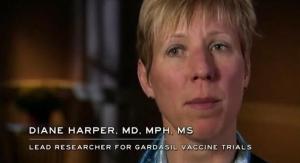
HPV vaccine Diane HarperDr. Diane Harper, an american obstetrician & gynecologist, is one of the HPV experts called in to design the clinical trials of Gardasil and Cervarix.  Although initially in favour of the vaccine, in recent years she has questioned Gardasil safety. She stated that “Gardasil has been associated with at least as many serious adverse events as there are deaths from cervical cancer developing each year”. Moreover, in an article published in December 2009 she concluded that, given the various limitations and risks of the vaccines, the benefits and risks of HPV vaccination must be weighed with the benefits and risks of HPV screening (Pap smears) to reduce cervical cancer in a cost-effective manner (40).

Dr. Harper does not support mandatory HPV vaccination for schoolchildren, because she believes that the duration of protection may be too short (see below). She has also criticised the short period of time vaccines were tried before its licensure,  and the misleading publicity carried out by the pharmaceutical companies. Learn more here.

8. Other debatable issues

Vaccination in boys

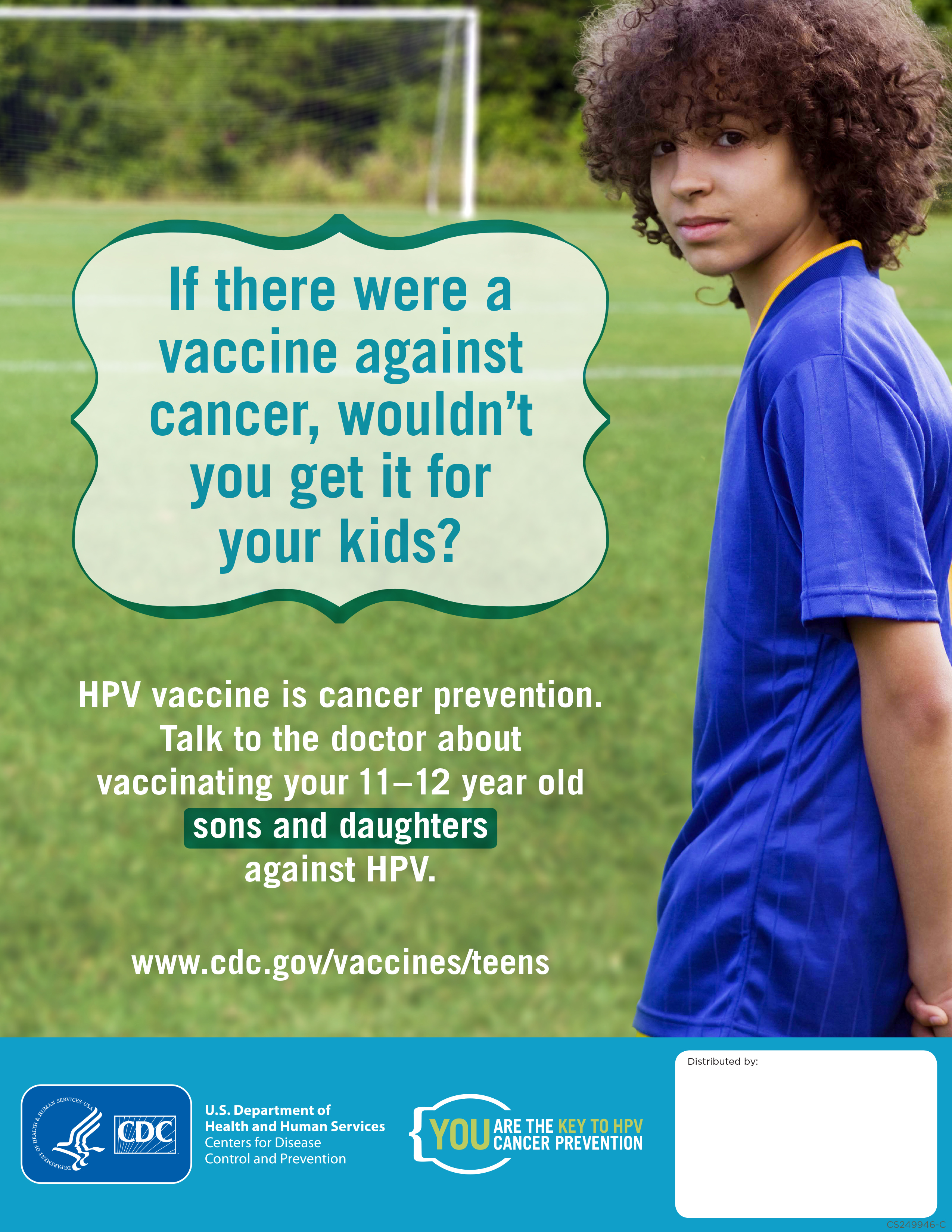
HPV vaccine is cancer prevention.

The rationale of vaccinating boys is to reduce the transmission of the HPV virus to women and to protect them against oral and anal cancers (41). Since these cancers are very rare, it has been questioned by some scientists whether is it worth to expose millions of boys to potential vaccine side effects in order to protect girls, or to prevent a so rare type of cancer (responsible for just 300 deaths in the USA); whether the benefit outweighs the risk and if men vaccination is cost effective. While countries such as Australia and the USA include boys in their vaccine recommendations, other countries (i.e., UK and France) have not yet adopted this measure.

Men who have sex with men are a special category, since they are at higher risk of anal cancer. Thus, some experts believe these men (and not every boy) should be offered the vaccine. However, this measure may be difficult to implement: in order get covered by their insurance or social security, young men may be required to declare their sexual preferences.

Immunogenicity of Gardasil vs. Cervarix
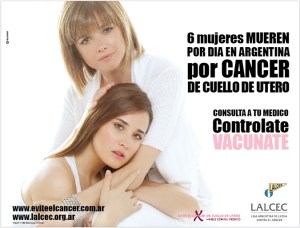
HPV vaccine ArgentinaImmunogenicity means the ability of the vaccine to provoke an immune response; in other words, the “strength” of the vaccine.

Most countries adopted vaccination with Gardasil instead of Cervarix assuming equal protection for cancer, with the “bonus” protection against genital warts. But is it really like this?

Several studies have demonstrated that Cervarix elicits stronger and longer-lasting immune response than Gardasil (42, 43).

These laboratory findings have also been confirmed by some clinical studies: Over the years, the efficacy of the Cervarix to protect vaccinated women from precancerous lesions (total vaccinated cohort-naive) was 93%, while Gardasil’s dropped to 43% (44)

Age of vaccination

HPV vaccine school girlThis subject has also raised intense debate and concern. As stated above, immune response provoked by the vaccines may be of limited duration, especially for Gardasil. This can be a serious limitation of the vaccine because, as Dr. Harper noted “… if the HPV vaccine does not last for at least 15 years, no cancers will ever be prevented; women will just get the cancers at a later time in life after the vaccine has worn off“.

If this short protection span is confirmed by clinical studies, a boost dose would solve this limitation. However, this would increase considerably the cost of the vaccine; moreover, women who don’t comply with this recommendation will become unprotected over time.

Increase of promiscuity?

Many people feared that the the HPV vaccine would lead girls to promiscuous behavior. This was actually investigated by some studies, and have proved not to be true: no increase in sexually transmitted diseases was observed among vaccinated girls (45), showing that vaccination is unlikely to promote unsafe sexual activity.

9. Unanswered questions…

  • HPV cancer vaccine flyer - 8-1/2 x 11Will the HPV vaccine reduce cervical cancer deaths in real-world conditions?
  • In light of the latest publications, should vaccination programs be halted until the situations is clarified?
  • Due to these latest concerns, will more women opt for no vaccination, missing the opportunity to be protected against cancer?
  • Since the syndromes potentially related to vaccines are difficult to diagnose, is it possible that they have been underreported in the past? Could they possibly become over reported in the future?
  • Will the vaccine create a false sense of full protection against cervical cancer, resulting in less women attending screening programs?
  • Will the vaccine lead to a reduction of the HPV types included in the vaccine, but to an increase of those not included in the vaccine?

10. Conclusion

HPV vaccine End-cervical-cancer-posterIt is indeed exciting to have a vaccine that protects against cancer. After seeing women dying from cervical cancer, I truly wish that cervical cancer will be eradicated in the future. But we MUST be sure that we don’t create more harm than good in the process.

HPV vaccine smear for a smear campaignI am in favor of vaccines. Vaccines have done a lot of good to humanity (just imagine if we would still have small pox, or poliomyelitis…). It is true that every single medical practice may come with side effects, and this include vaccines. But we MUST know exactly what are the vaccine risks, and whether the benefits outweigh the risks.

I firmly believe that governments, scientific societies and pharmaceutical companies MUST do an effort to inform people in a responsible and honest manner, so that all of us -young people, parents and physicians- continue to believe in good science, and vaccines don’t lose their credibility.

It will take 10 to 20 years to figure out the true benefit of the HPV vaccine. In the meantime, keep in mind that Pap tests never killed anyone, on the contrary, they have saved millions of lives. Therefore, don’t forget your Pap smear!


Read on the latest events related to the HPV vaccine here.


References

  1. International Agency for Research on Cancer, World Health Organization. Globocan 2012: Estimated Cancer Incidence, Mortality and Prevalence Worldwide in 2012
  2. CDC Grand Rounds: Reducing the Burden of HPV-Associated Cancer and Disease. Morbidity and Mortality Weekly Report (MMWR) January 31, 2014 / 63(04);69-72
  3. Human Papillomavirus and Related Diseases Report. hpvcentre.net March 20th, 2015
  4. Hartwig S, et al: Estimation of the epidemiological burden of HPV-related anogenital cancers, precancerous lesions, and genital warts in women and men in Europe: Potential additional benefit of a nine-valent second generation HPV vaccine compared to first generation HPV vaccines. Papillomavirus Research, In Press (Available online 16 June 2015)
  5. Patel H, et al: Systematic review of the incidence and prevalence of genital warts. BMC Infectious Diseases 2013, 13:39
  6. “FDA approves Gardasil 9 for prevention of certain cancers caused by five additional types of HPV” (press release). 10 December 2014.
  7. Gardasil® 9: new HPV vaccine approved in the European Union. The European Commission grants marketing authorisation for the first 9-valent HPV vaccine” (press release) Sanofi Pasteur MSD, June 17, 2015.
  8. Human Papillomavirus Vaccination. The American College of Obstetricians and Gynecologists, Committee Opinion Number 641, September 2015
  9. Recommendations on the Use of Quadrivalent Human Papillomavirus Vaccine in Males — Advisory Committee on Immunization Practices (ACIP), 2011. Morbidity and Mortality Weekly Report (MMWR), December 23, 2011 / 60(50);1705-1708
  10. Markowitz L, et al: Quadrivalent Human Papillomavirus Vaccine Recommendations of the Advisory Committee on Immunization Practices (ACIP). Morbidity and Mortality Weekly Report (MMWR), March 23, 2007 / 56(RR02);1-24
  11. Castellsagué X, et al: HPV vaccination against cervical cancer in women above 25 years of age: key considerations and current perspectives. Gynecologic Oncology 115 (2009) S15–S23
  12. Villa L, et al: Prophylactic quadrivalent human papillomavirus (types 6, 11, 16, and 18) L1 virus-like particle vaccine in young women: a randomised double-blind placebo-controlled multicentre phase II efficacy trial. Lancet Oncol 2005; 6: 271–78
  13. The FUTURE II Study Group: Quadrivalent Vaccine against Human Papillomavirus to Prevent High-Grade Cervical Lesions. N Engl J Med 2007;356:1915-27
  14. Paavonen J, et al: Efficacy of human papillomavirus (HPV)-16/18 AS04-adjuvanted vaccine against cervical infection and precancer caused by oncogenic HPV types (PATRICIA): final analysis of a double-blind, randomised study in young women. Lancet, Vol 374, No. 9686, p301–314, 25 July 2009
  15. Lehtinen M, et al: Overall efficacy of HPV-16/18 AS04-adjuvanted vaccine against grade 3 or greater cervical intraepithelial neoplasia: 4-year end-of-study analysis of the randomised, double-blind PATRICIA trial. Lancet Oncol, Vol 13, No. 1, p89–99, January 2012
  16. Harper D: Prophylactic human papillomavirus vaccines to prevent cervical cancer: review of the Phase II and III trials. Therapy 2008, 5 (3), 313-324
  17. Tabrizi SN, et al: Fall in human papillomavirus prevalence following a national vaccination program. J Infect Dis. 2012; 206(11):1645-1651
  18. Mariani L, et al: Early direct and indirect impact of quadrivalent HPV (4HPV) vaccine on genital warts: a systematic review. Adv Ther, 32 (2015), pp. 10–30
  19. Crowe E, et al: Effectiveness of quadrivalent human papillomavirus vaccine for the prevention of cervical abnormalities: case-control study nested within a population based screening programme in Australia. BMJ 2014;348:g1458 
  20. Baldur-Felskov B, et at: early impact of Human Papillomavirus Vaccination on cervical Neoplasia—Nationwide Follow-up ofYoung Danish Women. J Natl Cancer Inst (2014) 106(3): djt460 doi:10.1093/jnci/djt460
  21. Joura E, et al: A 9-Valent HPV Vaccine against Infection and Intraepithelial Neoplasia in Women. N Engl J Med 2015; 372:711-723
  22. Petrosky E, et al: Use of 9-Valent Human Papillomavirus (HPV) Vaccine: Updated HPV Vaccination Recommendations of the Advisory Committee on Immunization Practices. Morbidity and Mortality Weekly Report (MMWR), March 27, 2015 / 64(11);300-304
  23. Center for Disease Control and Prevention. Human Papillomavirus (HPV) Vaccine Safety. Updated September 28, 2015
  24. Slade BA, et al: Postlicensure safety surveillance for quadrivalent human papillomavirus recombinant vaccine. JAMA, 2009;302(7):750–757
  25. Wacholder S, et al: Risk of miscarriage with bivalent vaccine against human papillomavirus (HPV) types 16 and 18: pooled analysis of two randomised controlled trials. BMJ 2010;340:c712
  26. Garland SM, et al: Pregnancy and infant outcomes in the clinical trials of a human papillomavirus type 6/11/16/18 vaccine: a combined analysis of five randomized controlled trials. Obstet Gynecol 2009;114(6):1179–1188
  27. Dana A, Buchanan KM, Goss MA, et al. Pregnancy outcomes from the pregnancy registry of a human papillomavirus type 6/11/16/18 vaccine. Obstet Gynecol. 2009;114(6):1170–1178
  28. Moscicki A, et al: HPV in men: an update. J Low Genit Tract Dis. 2011 Jul; 15(3): 231–234
  29. Gonçalves AK, et al: Safety, tolerability and side effects of human papillomavirus vaccines: a systematic quantitative review. Braz J Infect Dis, Vol 18, Issue 6, Nov–Dec 2014, Pages 651–659
  30. Lu B, et al: Efficacy and safety of prophylactic vaccines against cervical HPV infection and diseases among women: a systematic review and meta-analysis. BMC Infect Dis. 2011;11:13
  31. De Vincenzo R, et al: Long-term efficacy and safety of human papillomavirus vaccination. International Journal of Women’s Health 2014:6 999–1010
  32. World Health Organization. Global Advisory Committee on Vaccine Safety, 11–12 December 2013: Human papillomavirus vaccines safety (HPV). Wkly Epidemiol Rec. 2014;89(7):58–60
  33. Denny L: Safety of HPV vaccination: a FIGO statement. Int J Gynaecol Obstet. 2013;123(3):187–188
  34. Wilson R, et al: HPV Vaccination in Japan. The Continuing Debate and Global Impacts. A Report of the CSIS Global Health Policy Center. April 2015
  35. Kinoshita T, et al: Peripheral Sympathetic Nerve Dysfunction in Adolescent Japanese Girls Following Immunization with the Human Papillomavirus Vaccine. Intern Med 53: 2185-2200, 2014
  36. a: Brinth L, et al: Suspected side effects to the quadrivalent human papilloma vaccine. Dan Med J 2015;62(4):A5064 b: Brinth L, et al: Orthostatic intolerance and postural tachycardia syndrome as suspected adverse effects of vaccination against human papilloma virus. Vaccine, 2015 May 21;33(22):2602-5
  37. Vaccination contre les infections à HPV et risque de maladies auto-immunes : une étude Cnamts/ANSM rassurante – Point d’information 13/09/2015
  38. Martínez-Lavín M, et: HPV vaccination syndrome. A questionnaire-based study. Clinical Rheumatology pp 1-3. Online 10 September 2015
  39. Blitshteyn S. Postural tachycardia syndrome following human papillomavirus vaccination. Eur J Neurol, Vol 21, 1, 135–139, 2014
  40. Harper, D: Current prophylactic HPV vaccines and gynecologic premalignancies. Current Opinion in Obstetrics and Gynecology 2009, 21:457–464
  41. Giuliano A, et al: Efficacy of Quadrivalent HPV Vaccine against HPV Infection and Disease in Males. N Engl J Med 2011;364:401-11
  42. Einstein M, et al: Comparative immunogenicity and safety of human papillomavirus (HPV)- 16/18 vaccine and HPV-6/11/16/18 vaccine: follow-up from months 12-24 in a Phase III randomized study of healthy women aged 18-45 years. Human Vaccines, vol. 7, no. 12, pp. 1343–1358, 2011
  43. Barzon L, et al: Neutralizing and cross-neutralizing antibody titres induced by bivalent and quadrivalent human papillomavirus vaccines in the target population of organized vaccination programmes. Vaccine, vol. 32, no. 41, pp. 5357–5362, 2014
  44. Di Mario S, et al: Are the Two Human Papillomavirus Vaccines Really Similar? A Systematic Review of Available Evidence: Efficacy of the Two Vaccines against HPV. Journal of Immunology Research, Volume 2015 (2015), Article ID 435141, 13 pages
  45. Jena A, et al: Incidence of Sexually Transmitted Infections After Human Papillomavirus Vaccination Among Adolescent Females. JAMA Intern Med. 2015;175(4):617-623


Photo Credits

Intro: Getty images; 1: curecancer.org; 2: m2.behance.net; 3: (collage) wikimedia commons; 4: cityofchicago.org; nkytribune.com; 5: english.cri.cnhpv.health.gov.au; 6: marketingmag.cascontent.cdninstagram.com; 7: Japan: wikimedia commons; Denmark: vaccineimpact.com; UK: independent.co.uk; France: science-et-vie.com; POTS: pinterest.com; Harper: initiativecitoyenne.be; 8: bphc.orgmigueljara.files.wordpress.comlh3.googleusercontent.com; 9: healthvermont.gov; 10: compasscayman.comi.dailymail.co.uk

THE MORNING AFTER PILL: FACTS AND FICTION

UPDATED JANUARY 2018Morning after pill

“The morning after pill is dangerous”. “You can’t take it more than once or twice in your lifetime”. “If you take it you won’t be able to become pregnant in the future”…

You may have heard all these rumours about the morning after pill and, in case “an accident” happens, you will think twice whether to take it or not… The truth is, the morning after pill has been around for more that 40 years now, but still many misconceptions and controversies persist.

In this article we will try to sort fact from fiction regarding the morning after pill in order to help you make your educated decision…

What is the morning after pill?

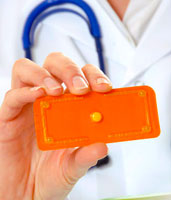
Emergency contraception by doctor emergency-contraception_171x200_M9201502The morning after pill, or post-coital pill is a form of emergency contraception that will prevent you from becoming pregnant after an unprotected intercourse, or if a condom breaks during intercourse.

In most countries, there are two types of emergency contraception pills (ECP):

-one containing levonorgestrel (LNG: Norlevo, Levonelle, Plan B, in different countries)

-another containing ulipristal acetate (ella in the USA, EllaOne in Europe).

In many countries such as the UK, France, USA, you may be able to get it (just LNG or both of them) without a prescription.

-When these ECPs are not available, certain ordinary birth control pills can be used as emergency contraception. The regimen is one dose of 4 to 6 pills -depending on the brand- followed by a second dose 12 hours later (the Yuzpe regimen, read more here). If you choose this method, though, it may be a good idea to talk to a health care provider for guidance.

Mifepristone is another highly effective emergency contraception method, available in few countries. However, this medication is also used to induce medical abortion, which may limit its widespread acceptability for use as ECP.

How does it work? Does it cause abortion?

The morning after pill prevents pregnancy by temporarily blocking the egg from being released (that is, inhibits ovulation). In addition, it may stop fertilization. Some people are concerned that the ECP may prevent a fertilised egg from becoming implanted in the uterus, which may be considered as an early abortion. Recent studies have shown that this medication is not effective when ovulation has already occurred, thus it does not seem to prevent implantation. Furthermore, in case an implantation has already occurred before you took it, the morning after pill will not provoke an abortion.

Do I have to take it right away?

Actually “morning after” is a bit of a misnomer: you can take ECP up to five days following unprotected sex. 

Until recently, it was accepted that pills containing LNG (Norlevo, Levonelle, Plan B) should be taken within 72 hours (three days) after the “accident”. However, recent evidence shows that LNG pills continue to be moderately effective if started between 72 and 120 hours; therefore LNG ECP can be taken up to five days after unprotected intercourse.The same is true for EllaOne/ella: it can be safely used up to five days after non-protected sex.

But the sooner you take it, the more effective it is (see below).

Is it effective?

Emergency contraception uhoh_poster_collageNeither type of morning-after pill is 100 per cent effective, but the failure rate is quite low. Like we said, you should take it as soon as possible after unprotected sex, no matter which pill you use. If you take LNG pills within the first 24 hours after sex, they reduce your risk of pregnancy by up to 95%; the efficacy will be reduced the more you delay the ingestion of the pill, roughly to 85% the 2nd day, 60% the third day.

Recent studies have confirmed that EllaOne/ella is more effective than the LNG pill, not only when taken 3-5 days after an unprotected intercourse, but also within the first three days.

Will I get severe side effects?

Emergency contraception pills are very safe: no deaths or serious complications have been ever linked to their use. Moreover, emergency contraception pills do not harm future fertility.

In general, side effects are uncommon and generally mild: the most common are nausea, vomits and menstrual abnormalities (your period may come earlier, later, with more or less blood than usual); more rare side effects are fatigue, breast tenderness, headache and abdominal pain.

There is some controversy as to whether the morning after pill is associated with an increased risk of ectopic pregnancy (a pregnancy outside the uterus, usually inside the fallopian tube). Available evidence suggests that ECP do not increase the chance of ectopic pregnancy; moreover, like all contraceptive methods, they reduce the absolute risk of ectopic pregnancy by preventing pregnancy in general.

Is there any limit to the number of times I can take it?

Emergency contraception womant taking 47929

It has been suggested (mostly by internet rumours) that it could be dangerous to take the ECP more than one or twice in your life. The following is an excerpt from the World Health Organization’s (WHO) site which throws light on this subject:

“There are no restrictions for the medical eligibility of who can use ECPs. Some women, however, use ECPs repeatedly (…) as their main method of contraception. In such situations, further counselling needs to be given on what other and more regular contraceptive options may be more appropriate and more effective. Frequent and repeated ECP use may be harmful for women with conditions classified as medical eligibility criteria (MEC) category 2, 3,or 4 for combined hormonal contraception or Progestin-only contraceptives (POC). Frequent use of emergency contraception can result in increased side-effects, such as menstrual irregularities, although their repeated use poses no known health risks”.

In other words, you shouldn’t take the ECP very often because: 1) you’d rather take the regular contraceptive pills and you will be better protected from unwanted pregnancy; 2) you may get some abnormal periods, BUT IN MOST WOMEN, ECP ARE NOT DANGEROUS! 3) in case you have a severe health problems such as history of stroke, blood clots, certain cancers, etc, then you should avoid frequent and repeat use.

In fact, the Royal College of Obstetricians, says that the LNG pill can be used even more than once in the same cycle. However, it does not recommend taking EllaOne in this way because, being a newer medication, we have not enough evidence for repeated use in the same cycle (although recent evidence indicates that it can be safely used more than once per cycle).

If you find yourself using the morning after pill very often, it might mean that you haven’t yet found a regular method of birth control that works for you. In that case, talk to your doctor about some of your other options.

If ECP fails and I get pregnant, will it affect my unborn baby?

LNG has been used for many years, and evidence shows that there is no increased risk of birth defects or other effects on the baby; new data supports that Ellaone/ella is as safe as LNG and no birth defects have been reported so far.

Can I take ECP if I breastfeed?

You may safely take the LNG pill if you are breastfeeding. Although EllaOne was not recommended during lactation until recently, updated guidelines state that ellaOne is not contraindicated for breastfeeding women, but that breastmilk should not be given to a baby for 24 hours (in the USA guidelines) or one week (in Europe) after a woman has taken the product.

Some final warnings…

  • Emergency contraception keep-calm-and-take-the-morning-after-pill-7The ECP will protect you from an unwanted pregnancy, but it will not provide any protection from sexually transmitted diseases. It is very important that you are aware of safe sexual practices and  incorporate them into your relationships.
  • There is some evidence that the LNG pill might be less effective in women weighting 75kg or more, while the efficacy of EllaOne does not seem to be affected by body weight. Thus, if you are over 75 kg you may prefer to take EllaOne.
  • The efficacy of the ECP will be decreased if you vomit after taking it. If you vomit within 2 hours of taking LNG pill, or 3 hours of taking EllaOne, you will need to take it again.
  • Contraindications: according to the WHO: “There are no medical contraindications to the use of levonorgestrel emergency contraception pills”. Some experts advise against its use in women with severe liver disease.
  • Interaction with other medications: some medications may eventually reduce the effectiveness of the ECP: Saint John’s wort, barbiturates, rifampicin, among others.
  • When to see your doctor: although the ECP may delay your period, contact you doctor if your period doesn’t come some days after the expected time. Likewise, it’s very important that you see your doctor right away if you have irregular bleeding and abdominal pain, to rule out the possibility of an ectopic pregnancy.

The bottom line:

Emergency contraception plan B 1258645.largeThe emergency contraception pill is a safe and effective method of contraception. Most of the rumours you may have heard  about it, are unfounded.

Having said that, it should not be abused.

The (very clever) brand name of the ECP in the USA, Plan B, indicates clearly how this medication should be used: as an option when your plan A (your regular contraception) failed…or wasn’t there.

Related reading:

Contraception: 14 common myths – busted

Fact or myth? Truths, half-truths and misconceptions about the Birth Control Pill

References:

World Health Organization: Emergency Contraception. Fact sheet N°244  June 2017

Trussell J, Raymond E, Cleland K; Emergency Contraception: A Last Chance to Prevent Unintended Pregnancy. November 2017

PREGNANCY DO’S AND DON’T’S (Part 3)

EXERCISE, SEX, WORK AND TRAVEL

The first post on Pregnancy do’s and dont’s analysed what is allowed and what discouraged during pregnancy concerning food, beverages, alcohol and cigarette (see here). The second part dealt with beauty treatments and medications (see here). Check out this third article on do’s and dont’s regarding exercise, sex, working and travel while pregnant…

EXERCISE 

Embed from Getty Images

Why to exercise: Beginning or continuing a moderate course of exercise during pregnancy is not associated with adverse outcomes. In fact, exercise may have many health benefits: it lessens some of the discomforts of pregnancy, it helps strengthen the muscles used in labor and delivery, it may give you more energy and make you feel better. There is also some evidence that exercise may prevent pregnancy-related diabetes and high blood pressure. The American College of Obstetrics and Gynecology recommends for pregnant women 30 minutes of moderate exercise per day on most days of the week.

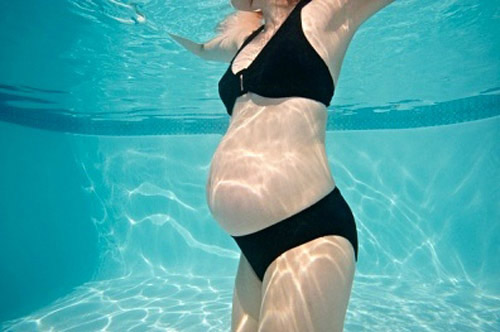
Pregnant woman by pool resizedCheck with your doctor first! There are certain circumstances in which women should not exercise, such as those with asthma or heart problems, or pregnancies complicated with bleeding, low placenta, weak cervix or premature contractions.

Exercises that are safe: The type of exercise you can do during pregnancy depends on your health and how active you were before getting pregnant. This is not a good time to start a very demanding sport. But if you were active before, you can continue to be, within reason. The following activities, in moderation, are especially good during pregnancy:

  • Swimming (it should be OK even in chlorinated pools)
  • Brisk walking
  • Prenatal exercise classes
  • Prenatal yoga

Prenatal aqua yoga 2-swimming-1387531814252Exercises to avoid: Pregnant women should avoid the following:

  • High-impact or vigorous sports that may involve the risk of abdominal trauma, falls or excessive joint stress.
  • Holding your breath during activity
  • Exercises that require lying flat on your back for more than three minutes (especially after the third month of pregnancy)
  • Heavy exercise spurts followed by periods of no activity
  • Exercise in hot and humid weather
  • Activities in hot water (see more here)
  • Vigorous racquet sports
  • Activities where falling is likely (e.g. skiing, horseback riding, mountain biking)
  • Contact sports: football, basketball, volleyball, softball
  • Scuba diving, which may result in birth defects and fetal decompression disease.

Tips for safe exercise:  Even though exercise can be beneficial, you should be careful. During pregnancy, your centre of gravity shifts and your balance changes. Your joints and ligaments get more relaxed. This may put you at a greater risk for falls. You tire more easily. Caution should be the rule!

Pregnant yoga on the beach 4495406433_45030db1e5_bThese are some tips for exercising while pregnant:

  • Avoid getting overheated.
  • Limit outdoor exercise in hot weather.
  • Avoid exercise that makes you very tired, or with high risk of falling or getting an abdominal trauma
  • Get up slowly after doing floor exercises, to avoid getting dizzy
  • Drink lots of water
  • Consume extra calories if you exercise regularly
  • Wear good support shoes and bra
  • Don’t push yourself too much! Listen to your body and slow down when you feel tired.

Signs to stop exercising: You should stop exercising and call you doctor if you feel one of the following:

  • Dizziness, fainting or nauseated
  • Rapid or irregular heatbeat
  • Short of breath
  • Pain in your chest
  • Recurring abdominal pain or uterine contractions
  • Swelling in your calf
  • Intense headache
  • Blurred vision
  • Vaginal bleeding
  • Fluid leaking from your vagina
  • A decreased or absence of baby’s movements

SEX

Sex and pregnancy resizedIs it safe? Sexual intercourse in pregnancy is not known to be associated with any adverse outcomes; therefore, it can be safely continued throughout pregnancy.

The baby is well protected inside the uterus! The uterine wall, the amniotic sac and the mucus plug (thick mucus that seals the cervical canal to prevent infections) will all keep the baby safe.

Keep in mind that intercourse can cause uterine contractions: the orgasm itself, nipple stimulation and prostaglandins (a substance contained in sperm) will all may make the uterus contract. In general, these contractions are mild and harmless.

Love making has been long proposed as a measure to induce labor at term. Although there is no scientific evidence that sex triggers labor, it may help, and it won’t harm!

pregnant woman and man resized 2Does sex feel the same while pregnant? Sex during pregnancy can be different than before. For some women, it may be more pleasurable, due to the high hormonal levels, genital engorgement and increase in vaginal secretions. For others though, sexual desire may be reduced for many reasons: nausea and dizziness during the first trimester, genital swelling which may sometimes cause discomfort, or you may just feel uneasy with your body changes…

Furthermore, your breasts get very engorged and tender, which may be pleasant for some women, but annoying for others…

Love making in practice… needless to say, certain positions will be uncomfortable, or impossible as your womb gets bigger…You may need to experiment a little bit to find which positions are fine for you… Especially during the third trimester, you should avoid lying flat on your back, because the pressure of the womb on the major blood vessels may cause a drop in blood pressure and dizziness. Although oral sex is fine, blowing into the vagina is to be avoided, as it may cause air embolism (a bubble of air entering the blood circulation), which may have fatal consequences.

When to avoid intercourse: there are certain situations, in which sexual intercourse is discouraged: if you have vaginal bleeding, a history of repeated miscarriages, preterm uterine contractions, or a weak cervix. In addition, you will be told to abstain from sex if you have a diagnosis of placenta previa (when the placenta lyes low in the uterus or covers the cervix). Always check with your doctor to make sure it’s OK for you to have sex.

When to call your doctor: you should call your healthcare provider if, after sex, you have intense abdominal pain, cramping, foul smelling discharge or bleeding coming from the vagina.

WORKING DURING PREGNANCY

Embed from Getty ImagesIf you are a healthy woman and you have a normal pregnancy, most likely it will be safe to continue working during pregnancy. Don’t forget to talk to your doctor about your work environment. There are certain occupations that may be dangerous, and others that may require certain modifications:

Lab tech 4-medical-and-laboratory-shots-stephen-smithExposure to radiation and radioactivity: there is evidence to support an association between x-rays or radioactivity exposure and miscarriages, birth defects and other pregnancy complications. You should inform right away your doctor and your employer if you receive occupational x-rays or radioactivity exposure.

Exposure to chemicals: Studies results are less conclusive for occupational exposure to chemicals, but there seems to be some increased risk of miscarriages and eventually malformations. Some examples of jobs with chemical exposure are dry-cleaning, painting industries, operating rooms, jobs involving pesticide or heavy metals exposure (lead, mercury). Inconclusive evidence also exists for women working in beauty salons (for more info check here).

Physically demanding work: jobs with prolonged standing (such as cooks, police officers, nurses) and heavy weight lifting may be associated with poor pregnancy outcome, that is, more likely to deliver prematurely, have low-birth-weight-babies and develop high blood pressure.

Woman Cook o-CHEF-COOKING-facebookStressful jobs and long working hours: Some research has shown that pregnant women who reported high work stress in combination with a long workweek (more than 32 hours a week) have two times higher risk of giving birth to a small baby.

The evidence on prolonged hours and shift working is inconclusive.

Desk jobs: Although some studies in the 80s had suggested that computers may increase the risk of pregnancy complications, many studies have been done since then, and these findings have not been confirmed. In fact the dose of radiation emitted by a computer is extremely low. The problem of a desk job lies mostly in sitting for a long period of time, which may lead to neck, eyes, wrist and back strain. If you have an office job, try to get up frequently and take a break from time to time.

Other possible occupational risks may include exposure to infections or heavy noise.

TRAVEL

Embed from Getty Images

Is it safe? For uncomplicated pregnancies, it is safe to travel throughout most of the pregnancy, usually until the last month (36 weeks). Inform your doctor whether you plan to travel, and precise where and when you plan to go. There are certain women that should not be traveling, such us those with vaginal bleeding, high risk of preterm labor or increased chances of forming blood clots.

Land travel: It is fine to travel by car, train or bus. It is very important that you wear your three-point seatbelt (shoulder and lap), above and below the womb, not over it. Try to avoid very long trips, stop or walk from time to time to stretch your legs in order to keep the blood circulating.

Sea travel: Traveling by boat is safe in pregnancy, but keep in mind that the boat’s motion may accentuate, or provoke, nausea and vomiting. So be prepared for that! In addition, avoid destinations which may not have easy medical access; if you are on a cruise make sure they have a healthcare provider on board.

Woman airport luggage Header_Samsonite2013Air travel:

  • For most of pregnant women, traveling by plane is permitted. Most of the companies will allow traveling up to 32 weeks of pregnancy, many others up to 36 weeks (you will need to provide a doctor’s permission). Check always with the airline company before making your reservation…
  • You should’n worry about walking through metal detectors at the airport security check, the radiation dose they emit is extremely low.
  • In order to avoid heavy luggage lifting, you may prefer to use suitcases with wheels to make travel as easy as possible.
  • Long-haul air travel is associated with an increased risk of venous thrombosis (blood clots formation), a potentially serious pregnancy complication. This risk is attributed predominantly to immobility during air travel, especially when traveling in economy class, where the space between the seats is very narrow. Precautionary measures include:
    • wear loose-fitting clothes and comfortable shoes,
    • do isometric calf exercises (stretch your legs from time to time),
    • walk regularly around the aircraft cabin,
    • avoid dehydration: drink plenty of water, minimise alcohol and caffeine intake,
    • check with your healthcare provider the possibility of wearing special elastic stockings in order to improve blood circulation.

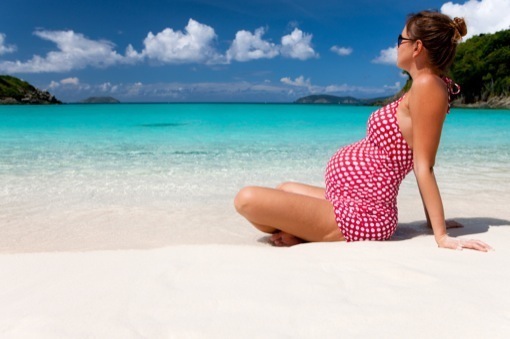
pregnant woman sunbathing at a Caribbean beachTravelling abroad: Travelling overseas may present certain challenges. Keep in mind the following:

  • Discuss with your doctor possible safety risks for you and your baby.
  • Certain destinations are best avoided: places with difficult access to health care, or high risk of contracting infections or other diseases.
  • Special consideration should be taken when travelling to countries where yellow fever vaccination or malaria prevention medication may be needed. Make sure that any vaccines or medications required are not contraindicated in pregnancy. You may check the authoritative site of the US Centers for Disease Control and Prevention (CDC) for useful information (see here), but you must talk about it with your doctor.
  • You may take with you a copy of your medical records, in case anything is needed in your foreign destination.

References

NICE: Antenatal Care- Routine Care for the Healthy Pregnant Woman. March 2008, UK

HAS: Comment mieux informer les femmes enceintes? Avril 2005, France

http://www.nhs.uk/conditions/pregnancy-and-baby/pages/pregnancy-exercise.aspx#close

http://www.hse.gov.uk/pubns/indg373.pdf

http://www.cdc.gov/niosh/topics/repro/employers.html

http://www.abcd-study.nl

Planning Your Pregnancy and Birth Third Ed. The American College of Obstetricians and Gynecologists, Ch. 5.

http://wwwnc.cdc.gov/travel

Photo credits

Exercise: Getty images; media3.onsugar.com;  sohanews2.vcmedia.vn; Jose Gabriel Lugo, Flickr.com;

Sex: Trevor, Flickr.com; Melissa Segal, Flickr.com;

Work: Getty images; fineartamerica.com; huffpost.com;

Travel: Getty images; globalblue.comtravelingtoworld.com

REPEATED ABORTIONS

Repeated or recurrent miscarriage is an issue that concerns us particularly because unfortunately is quite common, and causes intense anxiety to couples. A post specifically on this subject will follow later, but today I want to share with you the story of a woman who went through this problem, and fortunately managed to overcome it…

Baby's and daddy's hands resized

“I’m 30 years old and I just gave birth to my second child, but in order to arrive here we went through a long and hard road.

When we decided with my husband to take a step further with the birth of a child, we encountered some difficulties we did not expect. Our first attempt began with a loss, as the pregnancy suddenly stopped between 6 and 7 weeks of pregnancy. My gynecologist told me that many women start with a missed abortion and that I should not get discouraged. So, we retried but unfortunately our second attempt had the same inglorious end, between 6 and 7 weeks the gestation stopped.

..with faith and confidence in the medical team, we brought into the world our first child…

After this experience, my gynecologist proposed that, before we would try again, it would be a good idea to see more in detail if there was anything that could explain these losses, if something was wrong with us. For that reason, we did a series of tests for thrombophilia, immunological factors, autoimmune diseases, hormonal determinations, and a karyotype of the couple, which may hinder the smooth progress of pregnancy; and with these results on hand we went to consult a hematologist.

The hematologist, in collaboration with my gynecologist, told me that I as soon as I would become pregnant, I would need to follow a special therapy that would help me, and would increase the chances of having a healthy baby.

So when I got pregnant again, with the special treatment, with faith and confidence in the medical team, we brought into the world our first child. With continuous monitoring and support by my gynecologist, but also by the haematologist, I gave birth, with natural delivery, to a healthy baby boy.

No matter what problem you are facing, don’t give up, get informed, learn what you can do, ask help from people who can help you, don’t you stay in the dark and things might work out well for you too.

In the same way I just managed to deliver a beautiful baby girl.

When I decided to discuss the problem with some couples we knew, I found out that exactly the same problem faced two out of four close friends. That scared me, but in the end everything went well for all of us.

No matter what problem you are facing, don’t give up, get informed, learn what you can do, ask help from people who can help you, don’t you stay in the dark and things might work out well for you too. “

A.T.

Do you have any experience to share with us? You may help other women! Send us your story to woman2womenblog@gmail.com

PREGNANCY DO’S AND DONT’S (Part 2)

BEAUTY TREATMENTS AND MEDICATIONS

In a previous post on Pregnancy do’s and dont’s, we analysed what is allowed and what discouraged during pregnancy concerning food, beverages, alcohol and cigarette (see here). This second part will deal with beauty treatments and medications. A third part with more do’s and dont’s will follow…

BEAUTY TREATMENTS

Pregnancy comes with many body changes: weight gain, swelling…. And on top of that, hormonal shifts causing mood swings… You want to look beautiful! But is it possible to be both pregnant and beautiful? Of course! You will just need to be a little bit more careful and avoid certain things, either because there is some concern that they may be harmful for you baby, or we do not have enough evidence to prove their safety. This guide will help you be both beautiful and safe…

  1. Artificial tanning
  2. Botulinum toxin (Botox)
  3. Essential oils
  4. Hair dye, perms and straightening treatments
  5. Hair removal
  6. Insect repellents
  7. Nail beauty
  8. Skin care and cosmetics
  9. Spa visits
  10. Sunscreens
  11. Teeth whitening

1. Artificial tanning

Tanning bed resized 5759547871_da1a39bfab_o

Fake tan products are generally safe to use during pregnancy; they contain Dihydroxyacetone (DHA), which is not absorbed into the body when applied to the skin as cream, mousse or wipes. But avoid spray tans as the effects of breathing in the spray are not known.

You should stay away from tanning pills, they might be toxic to your baby (they are banned in several countries but they are sold online).

Solarium’s /Tanning Beds: we do not know whether they may affect the unborn baby, but they have been related to skin cancer, so better avoid them. The risk of overheating during pregnancy should also be considered (see below).

Anyhow, keep in mind that your skin is more sensitive while pregnant, therefore some products may cause skin irritations, or you may get burnt more easily.

2. Botulinum toxin (Botox)

Embed from Getty Images

Botox injections, used to smooth wrinkles are not recommended in pregnancy, unless they are done for medical reasons. Although no risk has been demonstrated, there are no adequate studies to prove its safety. In any case, don’t worry on this one, your wrinkles will get naturally smoother as your pregnancy progresses!

3. Essential oils

OLYMPUS DIGITAL CAMERA

Essential oils are highly concentrated substances coming from plants. They are used in aromatherapy, either in massage or put in a vaporiser to breathe them in. While some essential oils are safe for use in pregnancy, other can be harmful, either by causing contractions, bleeding or eventually birth defects. Consequently, you should be extremely careful with their use, and always ask advise from your physician or someone specialised  in aromatherapy. For a more detailed list of essential oils allowed and discouraged in pregnancy, click here.

4. Hair dye,  perms and straightening treatments

Embed from Getty Images

It is not clear whether the chemicals used for hair dying are completely safe during pregnancy, although the risks are likely to be low. Some studies have linked the use of hair dye with a rare type of cancer in babies (neuroblastoma); however, other studies have not corroborated this finding. To be extra cautious, it is usually advised to avoid them during the first trimester. To limit exposure to chemicals, you may prefer highlights. Vegetable dyes may be a good alternative, but be aware that many of those contain the same chemicals than the regular ones.

Regarding perms and straightening treatments, they seem to be safe during pregnancy. Again, it seems wiser to avoid them during the first trimester. You should better stay away from keratin treatments (also called Brazilian keratin treatments) as they contain formaldehyde which might be harmful to the baby (and to you).

  • There seems to be an increased risk of miscarriage in woman working at a hair salons. If you work at a hair salon and you cannot avoid exposure to chemicals, take the same precautions stated for nail salon workers (see below).

5. Hair removal

Epilation resized

There are no studies that evaluate the safety of electrolysis and laser. Electrolysis uses 2 types of currents, thermolysis and galvanic; while the former seems to be safe, galvanic electrolysis should not be used in pregnancy. Laser use during pregnancy has not been evaluated properly, although it seems to be safe. Most specialists will propose to avoid it throughout the whole pregnancy due to lack of information about its safety.

Waxing is safe and should be preferred to creams. Creams and depilatories contain barium sulfide powder and calcium thioglycolate. There is no evidence that they are harmful for pregnancy, but no studies have been conducted to prove their safety.

6. Insect Repellents

spray-316524_1280 resized

When used as recommended, most insect repellents are considered safe during pregnancy. Since there are different types of active ingredients (pesticides) in insect repellents, read the label carefully. The chemical DEET (N, N-ethyl-m-toluaminde or m-DET) is the most effective and best studied product, and is very good at preventing mosquito and tick bites. Both animal and human studies found no increase in babies’ defects, survival, growth, or development in the first year of life. In any case, try to minimise exposure by using a product with the lowest concentration of DEET needed for your protection. When possible, apply the pesticide to your clothing rather than directly to your skin.

Some insect repellent products contain citronella oil. While the American Food and Drug Administration (FDA) considers citronella- containing repellents safe for use, in Europe citronella use is banned due to some concerns on toxicity.

7. Nails beauty

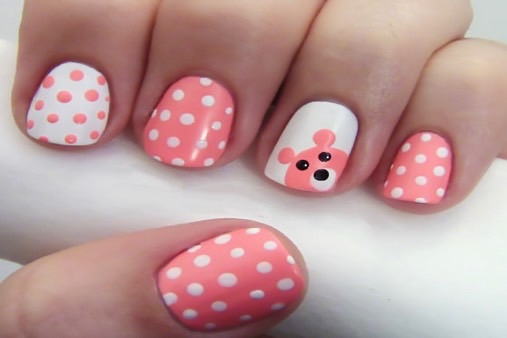
Nails pretty-polka-dot-nails resized

Gel nails, shellac nailpolish, acrylic nails, nail art… so many ways you can adorn your nails… But are they safe? Let’s see in  detail…

Nail polish: it is fine to use nail polish every now and then. There are three, potentially toxic substances in nail polish: Dibutyl Phthalate (DBP), Toluene  and Formaldehyde. Of particular concern is DBP; the European Union has banned its use, but it is still being found in some nail polishes. Formaldehyde and Toluene should not be a problem if used occasionally, but it may be an issue for pregnant women regularly exposed to them, such as those working in a nail salon. If you want to be on the safe side, use chemical-free products and make sure you paint your nails in a very well ventilated room.

Nail polish remover: It is OK if you use it occasionally. It usually contains acetone, a substance naturally produced by our body (in very small amounts). If you are regularly exposed to large amounts of acetone, there is a slight possibility of increasing your changes of having a miscarriage or a baby with some birth defects. To play safe, you may use acetone-free products.

Acrylic nails: concerns have been raised both on the glue used to stick the nails, and on a substance the nails may contain (methylmetacrylate or MMA, now mostly replaced by a supposedly safer EMA). Again, it should not be a risk if you do it occasionally, in a very well ventilated area. Moreover, you should know that fake nails have been related to higher chances of getting bacterial and fungal nail infections or nail deformities.

Gel nails: gel nails are applied as a gel to the nail, and then set by a UV lamp, or by the application of a chemical. Like acrylic nails, they contain methacrylate monomers, which may be dangerous for pregnant and non pregnant women. In addition, the UV lights used to dry the nails have been linked to skin cancer. The other problem is their removal: you need to keep your hands for 20 minutes in acetone. While the small amount of acetone used to remove the common nail polish seems to be harmless, this extended exposure raises some concern. So, if possible, stay away from gel nails.

Shellac nail polish: Shellac is a resin secreted by a bug, which is applied on the nails and then dried with an UV lamp. While no specific pregnancy-related risks have been observed due to its application, there has been a report on increased risk of skin cancer due to the UV exposure. In addition, the removal needs acetone for 20 minutes (see gel nails). Therefore, you best avoid it.

  • An issue to consider with these more “permanent” techniques is that, in case of an emergency or hospitalisation, where we may need to check the oxygen level from your thumb, permanent nail polishes will not allow us to do so, as hospitals usually do not have the means to remove it!
  • Some studies have shown an increased risk of miscarriages in salon workers. Therefore, if possible, you could ask a colleague to take over some of your work while you’re pregnant. If inevitable, take the following precautions:

•wear a face mask and rubber gloves

•work near a window

•take regular breaks for fresh air

8. Skin care and cosmetics

Cosmetics resized 7506998160_a85489a084_o

In general you can keep using your usual make-up and skin care regime as there’s no evidence that any cosmetics will be of any harm to your baby, with the exception of some anti-ageing creams (see below).

Cosmetics are covered by very strict safety laws, so you can be quite reassured that your moisturiser, serum, foundation or lipstick are safe to use when pregnant.

Acne medication and anti-ageing creams are related because they can both contain retinoids (a type of vitamin A). Retinoids are known to cause birth defects when taking orally. The main concern is the acne drug isotretinoin, which can be extremely harmful for the baby if taken during pregnancy. Retinoids are also used in some anti-ageing creams as they can speed up skin’s renewal, so stay away from them.

9. Spa visits

Spa beach resized 4172938501_1e44ae7db1_o

You can indulge yourself at a spa, get a massage, make a facial, get a manicure or pedicure. There are certain things, though, that you should avoid while visiting a spa:

  • saunas
  • steam rooms
  • tanning beds
  • hot springs
  • whirlpools, hot tubs and spa baths

All the above mentioned pose a risk of overheating, dehydration and fainting; there is a slight possibility that excessive heat may affect your baby’s development. If you are exercising in water, the temperature of the water should not exceed 32 0C, otherwise check that the water temperature is below 35 0C.

10. Sunscreens

Pregnant on the beach resized 29051269_4bb86aa8b6_o

Sunscreens are perfectly safe for use in pregnancy. Some of them do not penetrate the skin and others get absorbed but in very low amounts. Sunscreens containing titanium dioxide and zinc oxide may be preferred as they are powerful physical sun blockers and do not penetrate the skin.

11. Teeth whitening

Embed from Getty Images

Teeth whitening involves bleaching your teeth to make them lighter through a peroxide-based whitening agent or a laser. According to the British Dental Health Foundation, teeth whitening in pregnancy is best avoided as we are unaware of the potential side effects on babies.

MEDICATIONS

Medications resized 5223834995_d4a1650944_o

Few medicines have been established as safe to use in pregnancy. Medications in general should be used as little as possible during pregnancy and should be limited to circumstances whether the benefit outweighs the risk.

It is very important that you mention to your doctor any medicine you may be taking or you take occasionally. Some medicines may harm your baby and will need to be replaced by safer ones, whereas others are indispensable for you and you should keep taking them.

As  a rule, do not take unnecessary medications during pregnancy, and this is particularly important during the first trimester, which is the period when the baby’s organs are formed.

Herbal Medicines

Herbs tea-490311_1280 resized

“Natural” is not a synonym of “safe”, so do not assume that because something is natural or alternative is devoid of risk…

The only herbal medicines that have been assessed in trials and seem to be safe are ginger (used for nausea and vomiting in pregnancy) and red raspberry leaf (used to tone the uterus). The latter in several studies did not prove to be effective, but some experts propose, just in case, to use it only during the third trimester. You will find a list of herbal medications that seem to be safe and those that are better avoided here.

References
American Family Physician: Evidence-Based Prenatal Care: Part I. General Prenatal Care and Counseling Issues. April 2005, USA. http://www.aafp.org/afp/2005/0401/p1307.html
NICE: Antenatal Care- Routine Care for the Healthy Pregnant Woman. March 2008, UK
HAS: Comment mieux informer les femmes enceintes? Avril 2005, France
http://www.babycentre.co.uk/x536449/is-it-safe-to-use-essential-oils-while-im-pregnant
http://www.nhs.uk/chq/Pages/2402.aspx?CategoryID=54#close
http://www.babycentre.co.uk/a536346/herbal-remedies-in-pregnancy
Photo credits
Intro: Getty images; 1. Miran Rijavec, Flickr.com; 2. Getty images; 3. Wikimedia commons; 4. Getty images; 5. http://www.lingrid.lt/straipsniai/oda.png; 6. Pixabay.com; 7. http://glamradar.com/10-cute-and-easy-nail-designs-ideas/; 8. Joe Hsu, Flickr.com; 9. Casa Velas Hotel, Flickr.com; 10. Arne Hendriks, Flickr.com; 11. Getty images; Medications: Gatis Gributs, Flickr.com; Herbal: Pixabay.com

PREGNANCY DO’S AND DON’T’S (Part 1)

FOOD, DRINKS, ALCOHOL AND TOBACCO

Yes!! the pregnancy test is positive! You go and share the good news with your friends and relatives…And that very same moment, people will start “bombarding” you with advices: do this, don’t do that… So you start wondering: What is safe? What can harm my baby?

This post is about the most common “Is it safe….?” questions. Since the subject is extensive, this will be “Part 1”, dealing with food, drinks, alcohol & tobacco. More do’s and dont’s are coming….

FOOD AND DRINKS

Embed from Getty Images

Eating healthy is one of the best things you can do to your baby, and to yourself! There is not a specific diet for pregnancy; you should just follow a healthy, varied, balanced diet: plenty of fruits, grains and vegetables, but also dairy products and meat, which provide iron, calcium, vitamins and proteins. You don’t need to eat for two! Actually, if you have a normal weight, only a few extra calories a day are needed while pregnant: none during the first trimester, about 300 the second, 450 the last trimester!

Try to eat frequent and small meals, and avoid eating a copious meal before bedtime. Although sweets, fatty or processed food should not be in your every day diet, don’t feel bad if you get occasionally tempted! In any case, pay attention to quality, but also to quantity: excessive weight gain may put you at risk of having gestational diabetes, pregnancy-induced hypertension or delivering a macrosomic (too big) baby…Not to mention that you will suffer to lose those extra kilos after birth!

Herein you will find some things you need to know about eating and drinking during pregnancy:

Meat & Eggs

Red meat d56da7e3faa04dd1_steak.xxxlarge

Meat is an excellent source of protein, iron, vitamins and minerals. But you should only eat well-cooked meat. Forget about carpaccio, steak tartare or saignant!

Eating undercooked or raw meat can lead to toxoplasmosis, a severe infection that may harm your baby. Uncooked cured meat, such as salami or prosciutto should also be avoided. Liver and liver products (such as pate) contain high levels of vitamin A, which is toxic for the baby. Indeed, a single serving of cow’s liver contains three times the recommended daily amount of vitamin A allowed in pregnancy, so even if liver is considered to be a healthy food, rich in proteins, iron and vitamins, stay away from it, or consume it no more than once a month.

Undercooked meat, especially poultry can carry salmonella, which may cause a very severe form of food poisoning, so pay special attention to cook well your chicken. Since Salmonella is also present in eggs, the consumption of raw or partially cooked egg is discouraged (this includes homemade mayonnaise, tiramisu, etc).

Fish & Seafood 

Had sushi for lunch last Saturday. It was delicious.

Fish is an excellent source of proteins, vitamins and the valuable omega 3 fatty acids, which boost your baby’s brain and eye development. However, you should avoid certain fishes, such as shark, swordfish, king mackerel, tilefish, and tuna. These fishes are contaminated with large amounts of mercury, which can be toxic for your baby. To see more details about mercury levels in fish and allowed servings, please click here.

Raw fish and seafood may contain harmful bacteria or viruses. Therefore, do not eat raw fish (includes some varieties of sushi and sashimi) or raw oysters. Octopus, calamari, shrimp are fine as long as are properly cooked. With smoked fish (such as salmon and trout) the opinions are divided: while it is considered to be safe by some experts, others advise against it due to the possibility of contamination with listeria, a bacterium potentially harmful for your baby.

Cheese & Milk

Cheese is a great source of calcium and vitamins, so go ahead and eat cheese as long as it is made of pasteurised milk. You should not eat soft cheeses such as brie, camembert, chevre, roquefort, which may grow the rare, but dangerous listeria. Check the packages, where it usually states states if the cheese is made with raw or pasteurised milk, and avoid homemade cheeses. Hard cheeses are fine. For the same reason, the milk you drink should always be pasteurised.

Coffee

There is some (controversial) evidence that having more than 200 mg of caffeine a day may put you at risk of miscarriage or having a baby with low birth weight. This means that you may drink up to two cups of instant coffee or 1 cup of brewed coffee a day. Don’t forget other sources of caffeine, such as tea, cola, energy drinks or chocolate. For caffeine content of different beverages, please click here.

Herbal teas

Tea time resized 2352395427_fce9b7fde4_b

Herbal or natural doesn’t necessarily mean “safe”. Most teas are thought to be safe in pregnancy, as long as you don’t drink large amounts. Green tea contains caffeine, so do not exceed the recommended limit of 200 mg of caffeine per day (see above).

There are a couple of teas that you better avoid: Sage tea may be linked to miscarriage and high blood pressure. Parsley tea may increase the risk of miscarriage. Valerian is also best avoided, as well as chamomile in large amounts. Raspberry leaf tea may cause contractions, so do not consume it in early pregnancy, but it may be fine to drink during late pregnancy.

Artificial sweeteners

Sweetener resized 5608101779_536b9957ac_b

In general, artificial sweeteners seem to be safe to have in pregnancy, they are though recommended with moderation. Stevia and sucralose should be preferred. Aspartame seems to be safe with moderate consumption, but it should be avoided by anyone with a rare disease called Phenylketonuria (PKU) or by persons with high levels of phenylalanine in blood. Saccharin and cyclamate have been possibly linked to same types of cancer, so they are best avoided in pregnancy.

ALCOHOL AND TOBACCO

White wine and painting resized 98337136_fc50b5a6b0_o

Alcohol in large amounts is highly toxic for the unborn baby. For light (social) drinking, the data has been contradictory. According to the British organisation NICE, although there is uncertainty regarding a safe level of alcohol consumption in pregnancy, at this low level there is no evidence of harm to the unborn baby: no more than one or twice a week, 250cc beer or 1 shot (25 ml) spirit or 2 small (125 ml) glasses of wine. Nevertheless, NICE recommends to avoid alcohol consumption during the first trimester due to a possible increased risk of miscarriage.

Cigarette resized 4322886680_87b73de16b_b

The dangers of smoking have been widely established. Smoking during pregnancy puts you at higher risk of having a baby with low birth weight, as well as stillborn, sudden infant death syndrome, miscarriage, premature labor and placental abruption. Moreover, later evidence incriminates smoking of causing birth defects. See more information here. The risk includes even secondhand smoke. If you are pregnant and you keep smoking, discuss with your doctor the options you have to quit as soon as possible…


References

American Family Physician: Evidence-Based Prenatal Care: Part I. General Prenatal Care and Counseling Issues. April 2005, USA. http://www.aafp.org/afp/2005/0401/p1307.html
American Family Physician: Evidence-Based Prenatal Care: Part II. Third-Trimester Care and Prevention of Infectious Diseases. April 2005, USA. http://www.aafp.org/afp/2005/0415/p1555.html
ACOG: FAQ – Nutrition During Pregnancy. September 2013, USA. http://www.acog.org/Patients/FAQs/Nutrition-During-Pregnancy
NICE: Antenatal Care- Routine Care for the Healthy Pregnant Woman. March 2008, UK
HAS: Comment mieux informer les femmes enceintes? Avril 2005, France


Photo credits

1.Getty images; 2.media1.onsugar.com; 3.alachia, Flickr.com; 4.Back East Photography, Flickr.com; 5.Susanne Nilsson, Flickr.com; 6.Steve Nodgrass, Flickr.com; 7.Luz Bratcher, Flickr.com; 8.emdot, Flickr.com; 9.Shrikant Nigam, Flickr.com


SMOKING IN PREGNANCY: MORE DANGEROUS THAN WE THOUGHT

We knew for many years that smoking during pregnancy was harmful for the baby, as it has been linked to increased risk of miscarriage, preterm labor and low birthweight. But a recent study came to incriminate cigarette smoking for something we were not sure yet: birth defects.

British scientists examined the literature published on the subject the last 50 years, and after putting all the information together in what is called a meta-analysis, they came up with the conclusion that smoking is indeed responsible for certain birth defects.

The higher risk was for a malformation called gastroschisis, in which the baby is born with the intestine or stomach protruding outside the body through a hole in the abdominal wall; for this anomaly, babies of women who smoked during pregnancy had 50% increased risk.

In addition, they found that babies born from mothers that smoked while expecting had higher risk for the following:

  • Musculoskeletal defects, that is, missing or shortened arms and legs, cleft lips, cleft palate, craniosynostosis (abnormally shaped head): 26% higher risk;
  • Gastrointestinal malformations: 27% more chances.
  • Undescended testis in baby boys: 13% higher chances.
  • Heart problems: 9% excess risk.

That cigarette is toxic for a developing baby does not seen illogical: cigarettes contain more than 7000!! chemicals, most of which can easily cross the placenta. And we know very well that cigarette is highly toxic for adults and children.

The mechanism by which cigarettes may cause all these defects is not clearly understood, but the key seems to be reduced oxygen supply to the baby. Nicotine (the addictive component of cigarettes) causes blood vessels to constrict, this may lead to reduced blood flow to the placenta or to the baby’s tissues; another component, carbon monoxide, binds to hemoglobin (the molecule that carries oxygen in the blood) stronger than oxygen, thus lowering the amount of oxygen in the blood circulation. Maybe, some of the chemicals contained in cigarette have a direct toxic effect on the baby’s tissues.

In light of this information, if you are a smoker you should make every possible effort to quit smoking as soon as you learn you are pregnant, or even better, before conceiving.

Cigarette is addictive, so it may not be easy, but your baby can give you a great motivation to quit….


Reference
Allan Hackshaw, Charles Rodeck, and Sadie Boniface: Maternal smoking in pregnancy and birth defects: a systematic review based on 173 687 malformed cases and 11.7 million controls. Hum. Reprod. Update (2011) doi: 10.1093/humupd/dmr022. First published online: July 11, 2011

WANT TO GET PREGNANT?

You have decided to get pregnant, that’s great! Before you start trying, here are some tips you may find useful….

  1. Schedule a visit to your gynecologist
  2. Start taking folic acid
  3. Give up drinking, smoking, drugs…
  4. Eat healthy
  5. Reduce caffeine intake
  6. Watch your weight
  7. Exercise, but not too much
  8. Don’t forget your oral health
  9. Reduce your stress levels
  10. Avoid certain infections
  11. Reduce exposure to environmental hazards
  12. Figure out your fertile days

1. Schedule a visit to your gynecologist

Embed from Getty ImagesIt is a good idea, before trying to get pregnant to consult your gynecologist. At that visit, you may want  to discuss:

-any medical problem you may have. Some diseases may get better or worse while you are pregnant, some others may affect your baby.

-any medication you are taking. Certain medications are dangerous during pregnancy, and some have to be switched before you even try to conceive.

-your family history. There are diseases that run in families, and you may be able to do some tests to understand if you are at risk. Be sure to mention whether someone in your family has any health problem (e.g. Down syndrome, thalassemia or sickle-cell disease, cystic fibrosis, mental retardation), or if someone was born with a cardiac, neurological or other defect.

-your habits: diet, weight, exercise, any unhealthy habit (such as smoking, drinking, or taking drugs).

If it’s been a year since you had a checkup, you can also expect to have a pelvic exam, eventually an ultrasound and a Pap smear. You may also get tested for sexually transmitted diseases and other bacteria that can reduce your chances of getting pregnant.

Some couples may decide to undergo some prenatal blood exams, including genetic testing for specific conditions, such as hemoglobinopathies (e.g. thalassemia) or cystic fibrosis, based on their ethnic background or family history.

A folic acid supplement may be prescribed at that point.

2. Start taking folic acid

2800841720_ab6c229284_o

Taking a folic acid supplement is very important. By taking 400 mcg of folic acid a day for at least one month before you conceive and during your first trimester, you reduce your chances of having a baby with some births defects (such as spina bifida) by 50 to 70 percent.

You may also consider some multivitamin supplements that may help you get pregnant. Make sure though, not to exceed the recommended doses of vitamin A (unless it’s in a form called beta-carotene). Getting too much vitamin A can cause birth defects.

3. Give up drinking, smoking, drugs…

4322475363_b7d6a1c20d_qIf you smoke, drink or take drugs, now’s the time to stop!

Tobacco use can affect fertility both in women and men, and this seems to be true even for secondhand smoking. Smoking or taking drugs while you are pregnant can lead to miscarriage, premature birth, low-birthweight babies and (according to recent studies)  congenital malformations.

Alcohol can also reduce fertility, therefore it’s a good idea to cut back when you start trying to get pregnant. Drinking alcohol during pregnancy can cause birth defects and other severe problems to you baby.

4. Eat healthy

9577668909_02670b3797_qIt is now a good time to start eating healthy: plenty of fruits and vegetables every day, as well as whole grains and foods that are high in calcium – like milk and yogurt. Eat a variety of protein sources, such as beans, nuts, seeds, and meats.

While fish is an excellent source of omega-3 fatty acids (which are very important for your baby’s brain and eye development), as well as proteins, vitamin D and other nutrients, it also contains mercury, which can be harmful. It is usually recommended that pregnant women eat up to 2 servings a week of fish that are not high in mercury (such as herring, trout, salmon, and sardines), and avoid shark, swordfish, king mackerel, tilefish. The consumption of white canned tuna should be limited to 1 serving per week.

5. Reduce caffeine intake

3155462396_d7f6b94586_qThere seems to be an association between high caffeine consumption and reduced fertility. Too much caffeine has also been linked to a risk of miscarriage in some studies, but not in others. To be on the safe side, it is recommended to limit coffee consumption to 1 cup a day.


6. Watch your weight

belly-2354_1280You may have an easier time conceiving if you’re at a healthy weight. Being over or under the ideal weight makes it harder for some women to become pregnant.


7. Exercise, but not too much

8552318056_f938f51ff2_qA fitness program will result in a healthy body, fit for pregnancy. In addition, exercising is a great way to relieve the stress that can be both the cause and consequence of not getting pregnant…

You may consider walking or cycling or swimming, on most days of the week, for about 30 minutes. To increase flexibility, you may try stretching, Pilates or yoga.

But be careful not to overdo it. Very intense exercise seems to have the opposite effect, as it has been related to infertility in some studies.

8. Don’t forget your oral health

Woman with toothbrush

Hormonal changes during pregnancy can make women more susceptible to gum disease, causing the gums to bleed easily while flossing or brushing. But if you take care of your oral health before trying to conceive you have less chances of experiencing problems while pregnant.


9. Reduce your stress levels

7676579466_42b4fd82d1_qIt is becoming clearer that stress is responsible for infertility; indeed, several studies reveal that relaxation techniques increase the chances of getting pregnant. Furthermore, a recent study confirms something we see in everyday practice: pregnancy is much more likely to occur during months when couples report feeling happy and relaxed and is less likely to happen during the months they report feeling tense or anxious. The influence of stress on infertility, though is not straightforward, and it may vary in different women.

10. Avoid certain infections

337315801_4f8f28992f_q

You’ll want to stay away from certain foods such as raw and undercooked red meat, fish and poultry, raw eggs, unpasteurised milk and soft cheeses. These foods can cause dangerous infections, such as listeriosis, salmonella and toxoplasmosis.

In order to avoid toxoplasmosis it’s also a good idea to wear gloves when digging in the garden or the cat’s litter box, if you have one.

11.Reduce exposure to environmental hazards

2575598759_f2109d9152_qThere is some evidence to support that routine exposure to certain chemicals or radiation may be harmful for pregnant women. If you work in such an environment, you’ll need to make some changes before you conceive. In addition, some cleaning products, pesticides, solvents, etc, can be dangerous during pregnancy.


12. Figure out your fertile days

2827062969_951d6cf19b_qInitially, you may prefer to let fate decide when you will conceive. But if you want to be more precise in calculating your fertile days:

First, you should understand when your ovulation occurs. For that, you may use an ovulation calculator, that is, a web tool or application where you write down your period days for some months and you learn when you are fertile; you will find several online, many are designed for smart phones. With these calculators, you get a rough estimate of your fertile days.

If you want to be even more exact, you may start recording your basal body temperature (BBT) and your cervical mucus changes. If you chart them over several months, you may more easily understand when you’re ovulating each month.

Ovulation predictor kits can also help you figure out when you’re ovulating by detecting a hormone (LH) in your urine.

Once you have a clear picture of your cycle, there’s only one thing left to do — get to work! It is advised to have sex every day or every other day beginning about five days before ovulation, and continuing through the day after ovulation. This is because, though sperm can live as long as five days inside a woman’s body, an egg’s life span is only about 12 to 24 hours. By having intercourse before you ovulate, as well as on the day of and the day after ovulation, you maximize your chances of getting pregnant.


Good luck! And hopefully soon with good news!

More info at gofertile.eu

Photo credits
1. Getty images; 2. @Doug88888 Flickr.com; 3. Paul Heskes Flickr.com; 4. PeterFranz Flickr.com; 5. Adam Selwood Flickr.com; 6. pixabay.com; 7. Richard foster Flickr.com; 8. Wagner Cesar Munhoz Flickr.com; 9. MeditationMusic.net Flickr.com; 10. Joost Nelissen Flickr.com; 11. tk-link Flickr.com; 12..craig Flickr.com